Are you confused about allowed or aloud? You are not alone. These two words sound exactly the same. But they have very different meanings. That is why many students, writers, and English learners search: “Is it allowed or aloud?”
This guide solves that confusion clearly and simply.
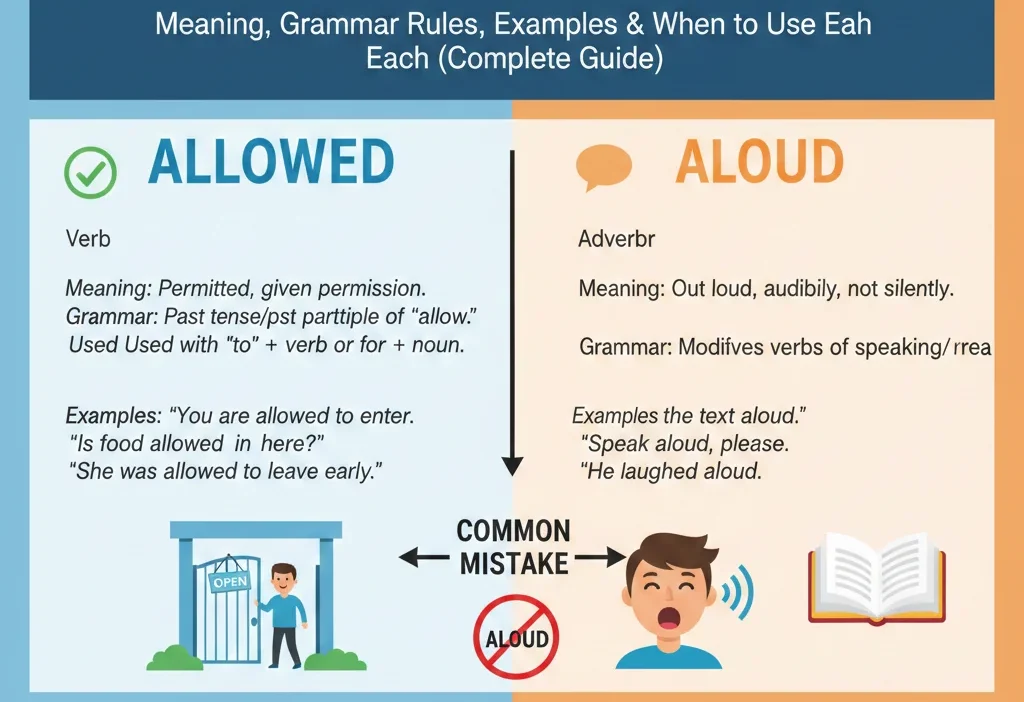
You will learn the Allowed or aloud meaning, see real Allowed or aloud sentences, understand grammar rules, and know exactly when to use aloud or allowed. We will also cover common mistakes, ESL errors, proofreading tips, usage trends, and a short Allowed or aloud quiz.
If you want a quick answer first and a deep explanation after, this article gives you both.
Allowed or Aloud means
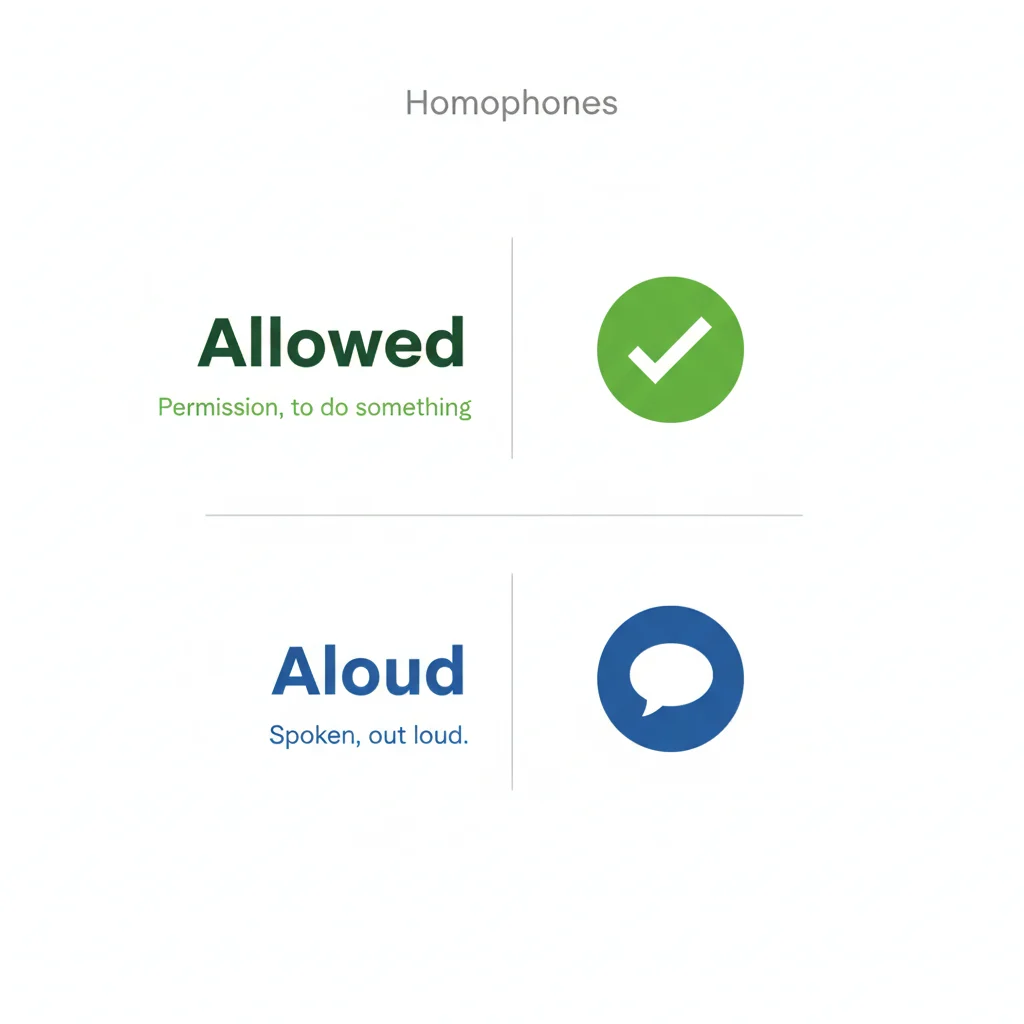
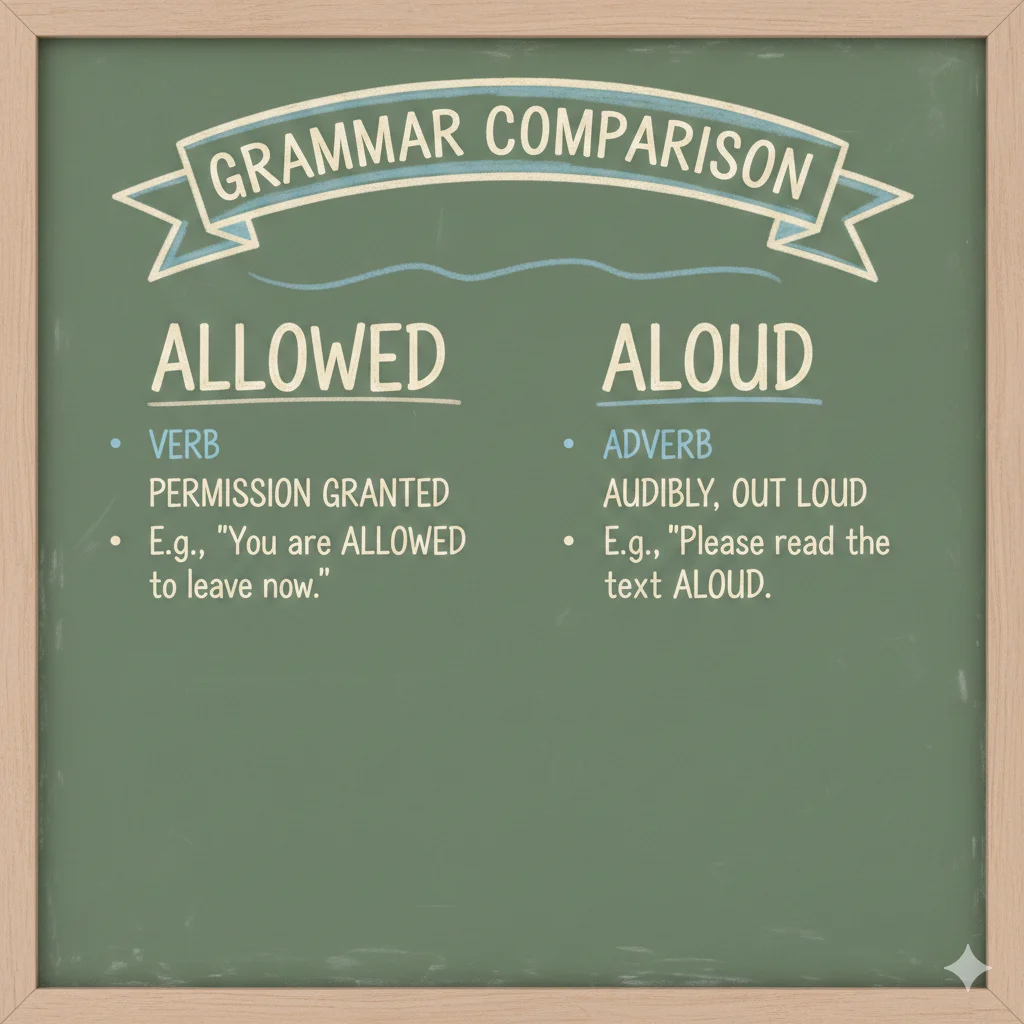
Allowed = permitted, given permission.
Aloud = spoken with sound, not silent.
Simple Examples:
- You are allowed to enter the building.
- She read the story aloud to the class.
Easy Memory Trick
- Allowed → contains “allow” → permission.
- Aloud → contains “loud” → sound.
If it is about rules or permission → use allowed.
If it is about speaking or reading → use aloud.
That is the fast answer.
The Origin of Allowed or Aloud
Understanding the history helps you remember the difference.
Origin of Allowed
- Comes from Old French alouer.
- Root word: “allow.”
- Means to permit or approve.
- It is the past tense and past participle of “allow.”
Example:
- Visitors are not allowed after 9 PM.
Origin of Aloud
- Comes from Old English meaning “loud.”
- Always connected to sound and voice.
- It is an adverb.
Example:
- He laughed aloud during the show.
The spelling difference exists because the words come from different language roots. One relates to permission. The other relates to sound.
British English vs American English Spelling
There is no spelling difference between British and American English for these words.
Both use:
- Allowed
- Aloud
Pronunciation is also the same:
/əˈlaʊd/
They are perfect homophones.
Comparison Table
| Word | Meaning | Part of Speech | Example |
|---|---|---|---|
| Allowed | Permitted | Verb (past) | Entry is not allowed. |
| Aloud | Spoken clearly | Adverb | Please read aloud. |
Unlike “color/colour,” these words do not change by region.
Which Spelling Should You Use?
Use allowed when talking about:
- Rules
- Laws
- Permission
- Approval
- Workplace policies
Example:
- Are pets allowed here?
Use aloud when talking about:
- Reading
- Speaking
- Saying something clearly
- Voice or sound
Example:
- Please say your answer aloud.
The rule does not change in the US, UK, Canada, Australia, India, or anywhere else. It is meaning-based, not region-based.
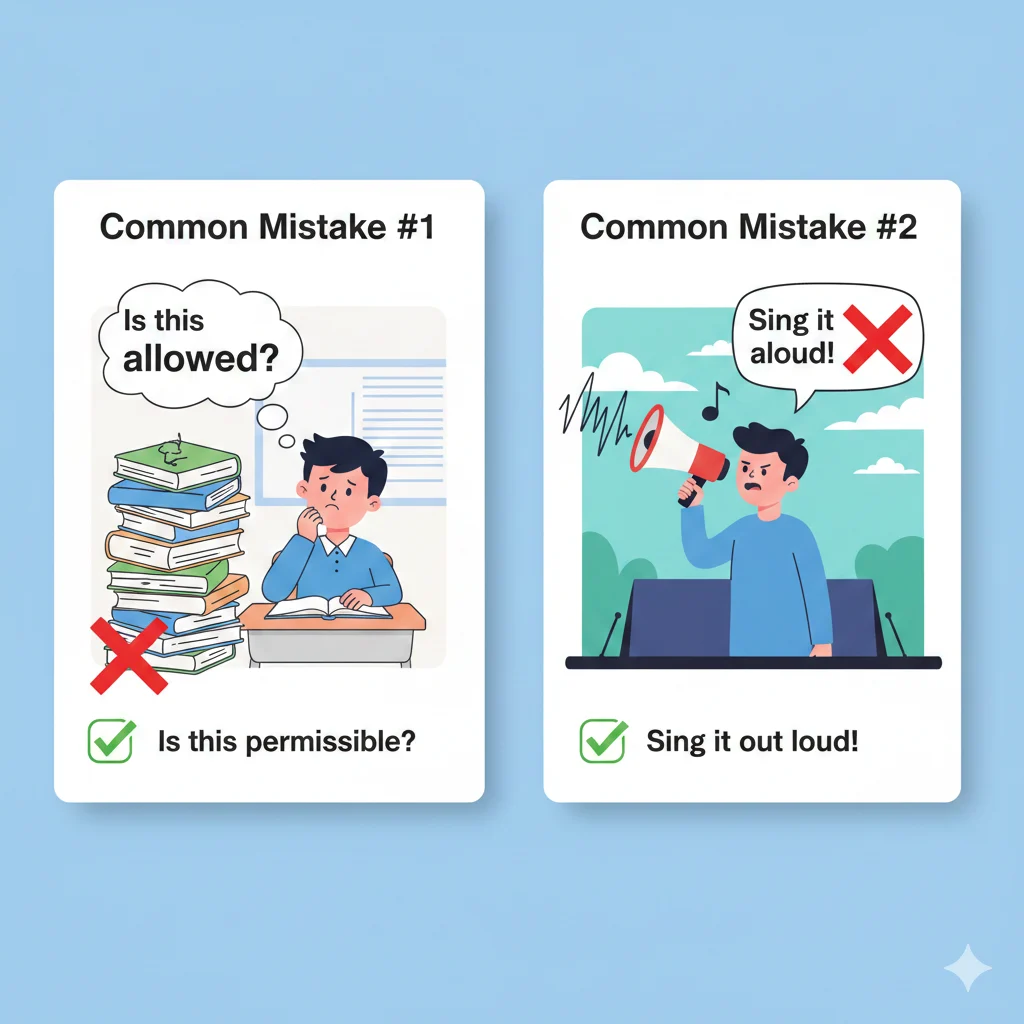
Common Mistakes with Allowed or Aloud
Here are common errors:
❌ You are not aloud to park here.
✔ You are not allowed to park here.
❌ She read the message allowed.
✔ She read the message aloud.
These mistakes happen because they are aloud allowed homophones sentences — same sound, different meaning.
Difference Between Aloud and Loudly
Many learners also confuse aloud with loudly.
- Aloud = not silently
- Loudly = high volume
Example:
- She read aloud. (Not silent)
- She shouted loudly. (High volume)
You cannot replace them freely.
Allowed vs Permitted
Both mean similar things, but tone differs.
- Allowed = common and natural
- Permitted = formal and official
Example:
- Students are not allowed to leave early.
- Entry is not permitted beyond this point.
In formal writing, “permitted” sounds stronger.
Allowed or Aloud in Everyday Examples
Here are practical Allowed or aloud examples:
In Emails:
- You are allowed to access the shared drive.
- Please read the agreement aloud before signing.
In School:
- Talking is not allowed during the exam.
- Read the paragraph aloud.
In News:
- Visitors are not allowed inside the building.
- The statement was read aloud in court.
On Social Media:
- Am I allowed to post this?
- I laughed aloud at that joke.
Why Spellcheck Does Not Catch This Error
Many writers ask: Why does spellcheck not fix this mistake?
Because both allowed and aloud are correct English words. Spellcheck checks spelling, not meaning. It cannot detect context errors.
Example:
- You are not aloud here.
The spelling is correct. But the meaning is wrong.
This is why proofreading is important.
ESL Learner Mistakes
English learners often confuse:
- Allowed vs Aloud
- Their vs There
- Your vs You’re
These are homophones. They sound the same but have different meanings.
The best way to avoid mistakes:
- Learn the meaning first.
- Check the sentence context.
- Practice writing sentences.
Mini Proofreading Checklist
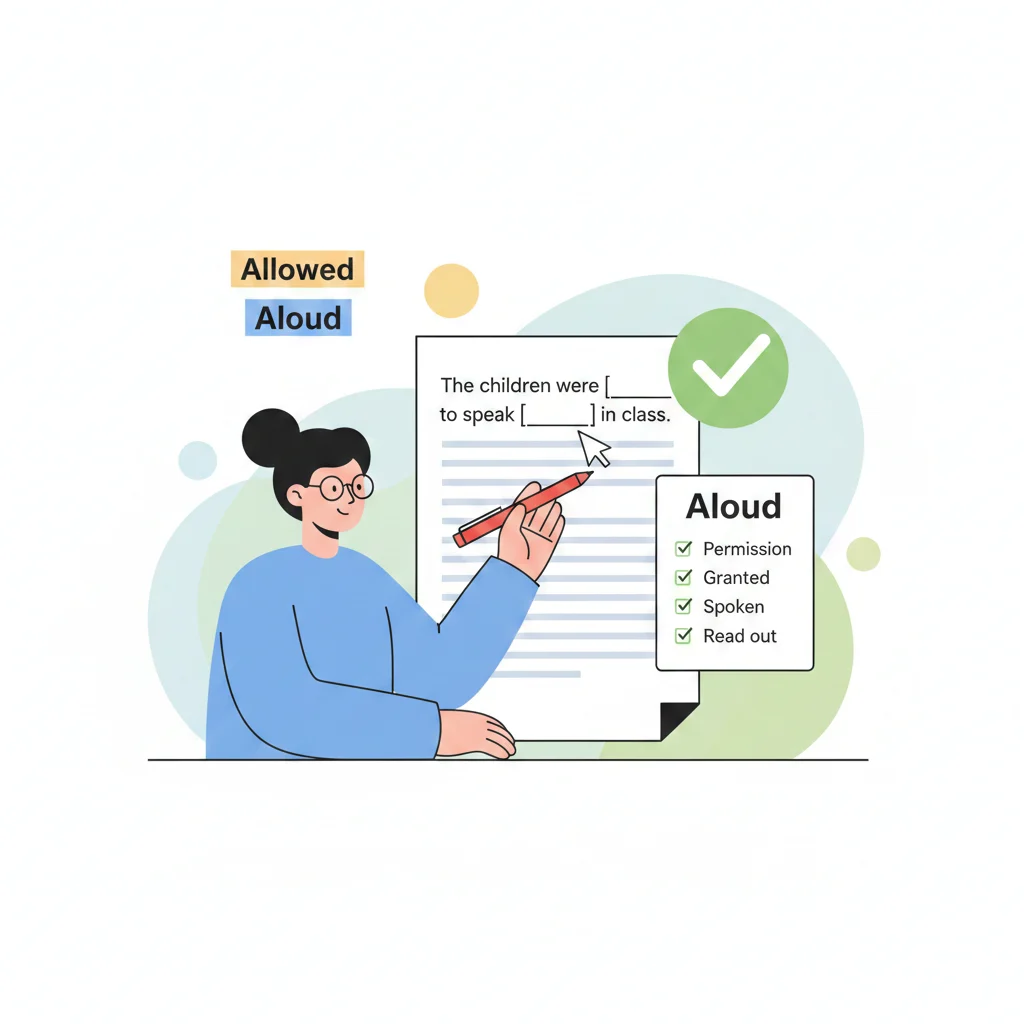
Before submitting writing, ask:
✔ Am I talking about permission? → allowed
✔ Am I talking about speaking? → aloud
✔ Does the sentence make logical sense?
✔ Can I replace it with “permitted”? If yes → allowed
✔ Can I replace it with “out loud”? If yes → aloud
This simple check prevents grammar errors.
Allowed or Aloud Grammar Rule
Grammar breakdown:
- Allowed = verb (past tense of allow)
- Aloud = adverb (describes how something is said)
Structure:
Subject + be + allowed
Example: We are allowed to leave.
Verb + aloud
Example: She spoke aloud.
This explains Allowed or aloud grammar clearly.
Allowed or Aloud – Google Trends & Usage Insights
Search data shows strong educational intent.
Most searches come from:
- Students
- ESL learners
- Teachers
- Exam preparation users
High search regions:
- United States
- United Kingdom
- India
- Pakistan
- Canada
Popular queries include:
- Allowed or aloud meaning
- Allowed or aloud sentences
- Allowed or aloud quiz
- When to use aloud?
- Is “aloud” grammatically correct?
- How to use aloud?
“Allowed” appears more in legal and workplace searches.
“Aloud” appears more in academic and reading contexts.
This shows clear user intent: grammar clarification and writing accuracy.
Allowed or Aloud Sentences Practice
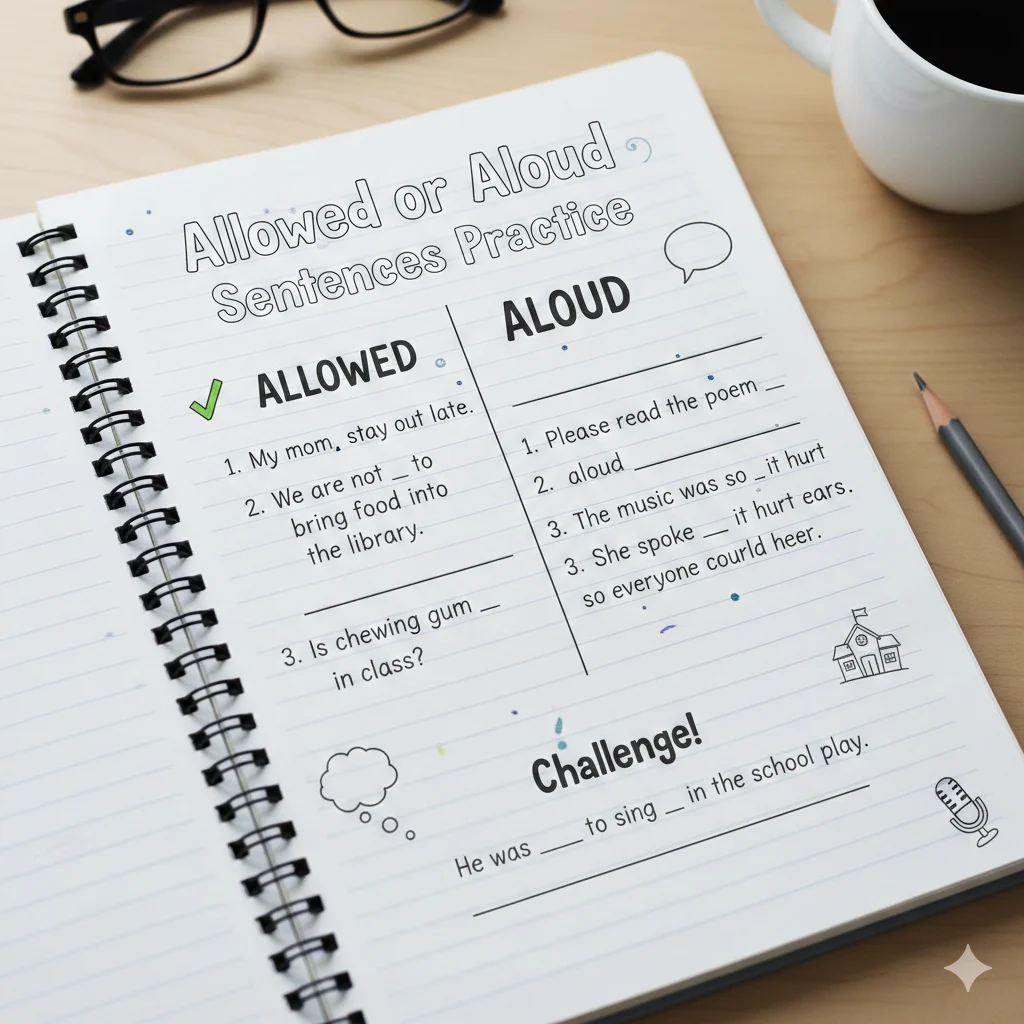
Fill in the blank:
- Are we ______ to leave early?
- She laughed ______.
- Is this behavior ______?
- Please read the poem ______.
Answers:
- allowed
- aloud
- allowed
- aloud
Allowed or Aloud Quiz
Choose the correct word:
- Mobile phones are not ______ in class.
- He cried ______ during the movie.
- Are visitors ______ inside?
- Please speak ______ so everyone can hear.
Answers:
- allowed
- aloud
- allowed
- aloud
FAQs
1. Allowed or aloud meaning difference?
Allowed means permitted. Aloud means spoken with sound.
2. When to use aloud?
Use aloud when reading or speaking out loud.
3. How to use aloud?
Place it after a verb: “She spoke aloud.”
4. Is “aloud” grammatically correct?
Yes. It is a correct English adverb.
5. When to use aloud or allowed?
Use allowed for permission. Use aloud for voice or sound.
6. Why do people confuse allowed or aloud?
Because they are homophones and sound identical.
7. Can both words be used in formal writing?
Yes, if used correctly.
Conclusion
Now you clearly understand the difference between allowed or aloud.
Allowed relates to permission, rules, and approval. It is a verb form of “allow.”
Aloud relates to speaking or reading with sound. It is an adverb.
They sound the same, but their grammar role is different. That is why spelling mistakes happen. Spellcheck often misses this error because both words are real.
To avoid confusion, remember:
Allowed = allow = permission.
Aloud = loud = sound.
Use the proofreading checklist. Think about meaning first. With this simple method, you will write correctly in emails, exams, professional documents, and social media.
Next time someone asks, “Is it allowed or aloud?” — you will know the answer instantly.

-
“Rachel Cusk spins stories with wit and flair, sprinkling puns and clever twists in every line—write: to form words, sentences, or text—making reading joyful!”