Many English learners and even native speakers search “became or become” because these two words look similar but work very differently in grammar.
The confusion gets worse in sentences like “I have became or become?”, “It has became or become?”, or “When did he became or become?”. These mistakes appear in emails, social media posts, exams, and even news writing.
The real problem is verb tense. Become changes form depending on time: present, past, or perfect tense. People often mix V1, V2, and V3 forms, which leads to incorrect sentences like “She has became” or “We have became friends.”
This article solves that confusion fast. You will get a quick answer, clear grammar rules, real-life examples, and professional usage advice for US, UK, and global English. You will also learn the difference between become and became, when to use each one, and how to avoid common mistakes.
If you ever wondered “Is became a word?”, “What have you become or became?”, or “Which spelling should I use?”, this guide is for you.
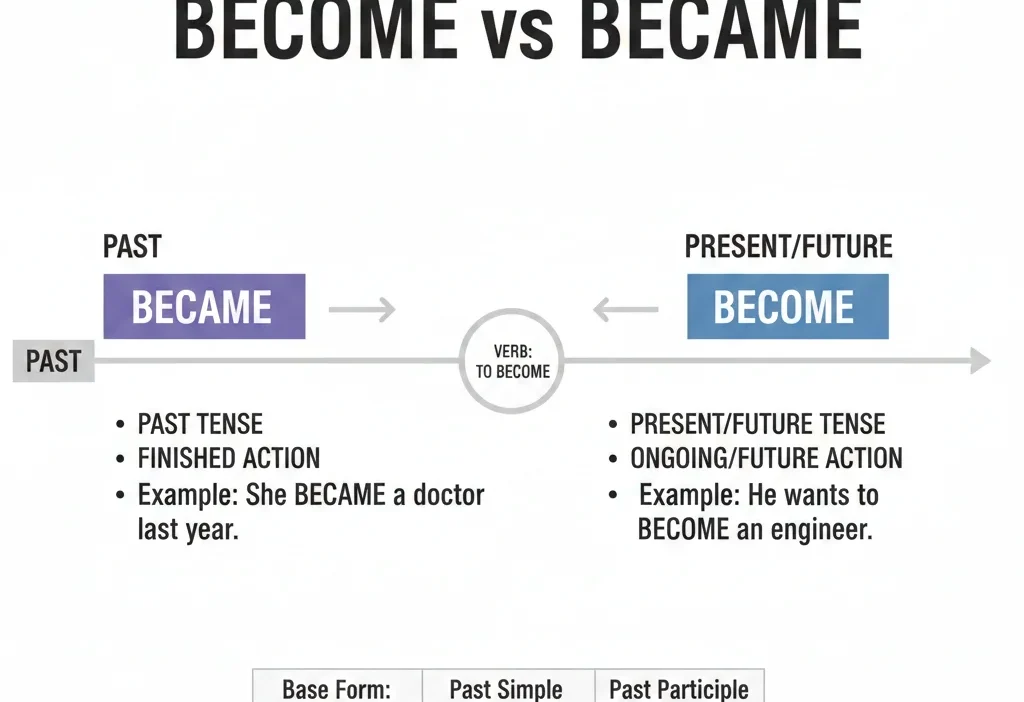
Became or Become means
Become is the base form (V1) of the verb.
Became is the past tense (V2) of become.
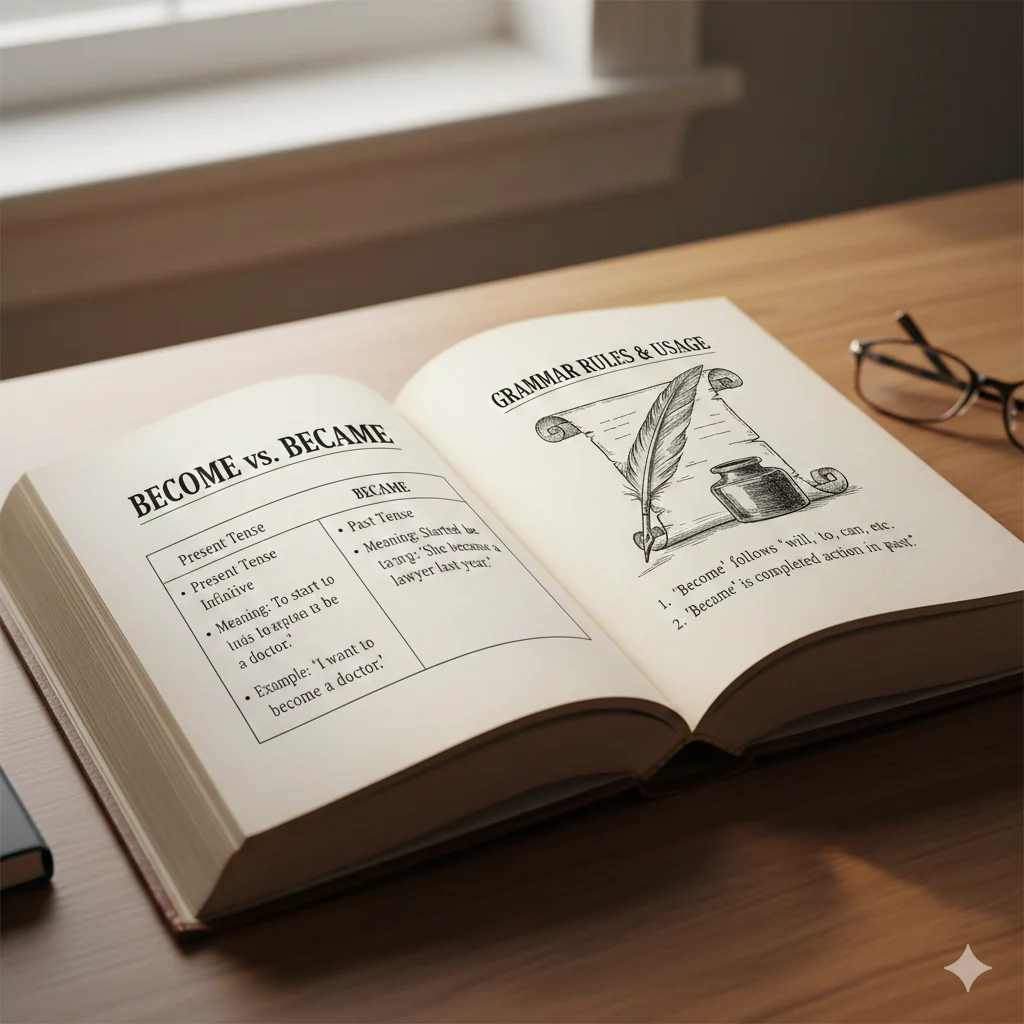
Simple rule:
- Use become with will, have, has, had (future or perfect tense)
- Use became for past actions
Examples:
- I want to become a doctor.
- She became famous overnight.
- We have become friends.
- He became angry quickly.
👉 Is became a word? Yes. It is the correct past tense of become.
The Origin of Became or Become
The verb become comes from Old English “becuman”, meaning to come to be or to turn into. Over time, English developed strong verbs, which change form instead of adding -ed.
That is why:
- Become → Became → Become
(V1 → V2 → V3)
There is no spelling difference between British and American English for this verb. The confusion exists only because English uses irregular verb forms, not because of regional spelling changes.
Understanding verb history helps explain why “had became” is wrong, while “had become” is correct.
British English vs American English Spelling
There is no spelling difference between British and American English for became or become.
Comparison Table
| Form | British English | American English |
|---|---|---|
| Base (V1) | become | become |
| Past (V2) | became | became |
| Past Participle (V3) | become | become |
✅ Same spelling
✅ Same meaning
✅ Same grammar rules
Which Spelling Should You Use?
Your choice depends on tense, not country.
Use become when:
- Talking about the future
- Using have / has / had
Examples:
- I will become a teacher.
- She has become confident.
- We have become friends.
Use became when:
- Talking about the past only
Examples:
- He became rich.
- She became angry.
- When did he became famous? ❌
- When did he become famous? ✅
Common Mistakes with Became or Become
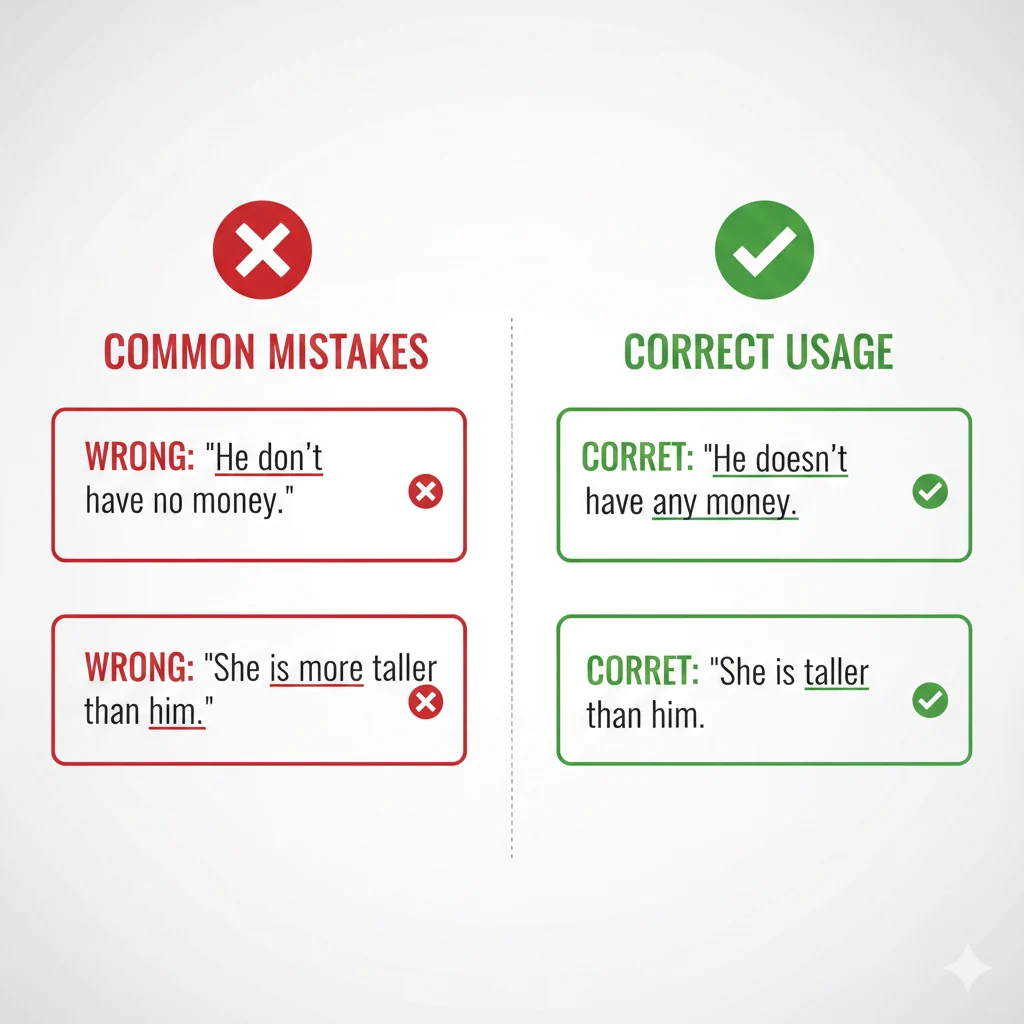
❌ Wrong vs ✅ Correct
- ❌ It has became
✅ It has become - ❌ I have became
✅ I have become - ❌ She has became
✅ She has become - ❌ We have became friends
✅ We have become friends - ❌ Had became
✅ Had become
👉 Rule to remember:
If have, has, had is present → always use become, never became.
Became or Become in Everyday Examples

Emails
- I have become aware of the issue.
- The situation became serious yesterday.
News
- The actor became a global star.
- The policy has become controversial.
Social Media
- You’ve become my inspiration.
- I became obsessed with this song.
Formal Writing
- The company has become a market leader.
- This theory became widely accepted.
Became or Become – Google Trends & Usage Data
Search data shows:
- “became or become grammar” is common among students
- “it has became or become” is a top mistake query
- “became or become past tense” peaks during exam seasons
Usage by region:
- US & UK: Grammar learning and writing checks
- Asia: ESL learners
- Global: Professional emails and exams
Most searches aim for quick correction + example, which this guide provides.
Comparison Table: Verb Forms
| Verb Form | Structure | Example |
|---|---|---|
| V1 | become | I want to become a writer |
| V2 | became | I became a writer |
| V3 | become | I have become a writer |
| V4 | becoming | I am becoming confident |
| V5 | becomes | She becomes nervous |
👉 What is V1, V2, V3, V4, V5 verb?
These are verb forms used to show time and action state.
FAQs – Became or Become
1. What’s the difference between become and became?
Become is base or past participle. Became is simple past tense.
2. What is an example of became?
She became famous after the movie.
3. Is it “you have became or become”?
Correct: You have become
4. What have you become or became?
Correct: What have you become?
5. Is “became” used with has or have?
No. Use become with has/have.
6. Became or become friends – which is correct?
- We became friends (past)
- We have become friends (present perfect)
7. Since when you became or become?
Correct: Since when did you become…
Conclusion
The confusion between became or become is common, but easy to fix once you understand verb tense. The key rule is simple: became is for the past, and become is used with future tense and perfect tense. If your sentence includes have, has, had, will, always choose become.
Mistakes like “it has became”, “she has became”, or “we have became friends” are grammatically incorrect, even though they are widely searched. Correct usage improves clarity, professionalism, and confidence in writing.
Whether you are writing emails, preparing for exams, posting on social media, or working in professional communication, choosing the right form matters. English grammar rewards precision, and mastering small rules like this makes a big difference.
Remember the verb forms: become (V1), became (V2), become (V3). Once this pattern is clear, you will never hesitate again.
If English feels confusing, you are not alone—but with guides like this, it becomes simple.

-
“Ali Smith weaves puns like magic, sprinkling humor and wit in every line. Guaranteed to make your day a little brighter!”