Have you ever paused while writing an email, article, or resume and wondered: “Is it endeavors or endeavours?” You’re not alone. This small spelling difference confuses millions of English users worldwide. Both spellings look correct, sound the same, and carry the same meaning—yet choosing the wrong one can feel unprofessional, especially in formal or international writing.
The confusion usually comes from British English vs American English spelling rules. People searching for endeavors or endeavours meaning often want a quick answer, but they also want to know which spelling fits their audience, whether it’s correct to say future endeavors, and how the word is used in real sentences.
This guide solves all of that. You’ll get a fast explanation, historical background, spelling rules, real-world examples, and professional advice on which version to use. By the end, you’ll confidently know which is correct, endeavours or endeavors, and how to use it properly in any context—emails, news, social media, or formal writing.
Endeavors or Endeavours
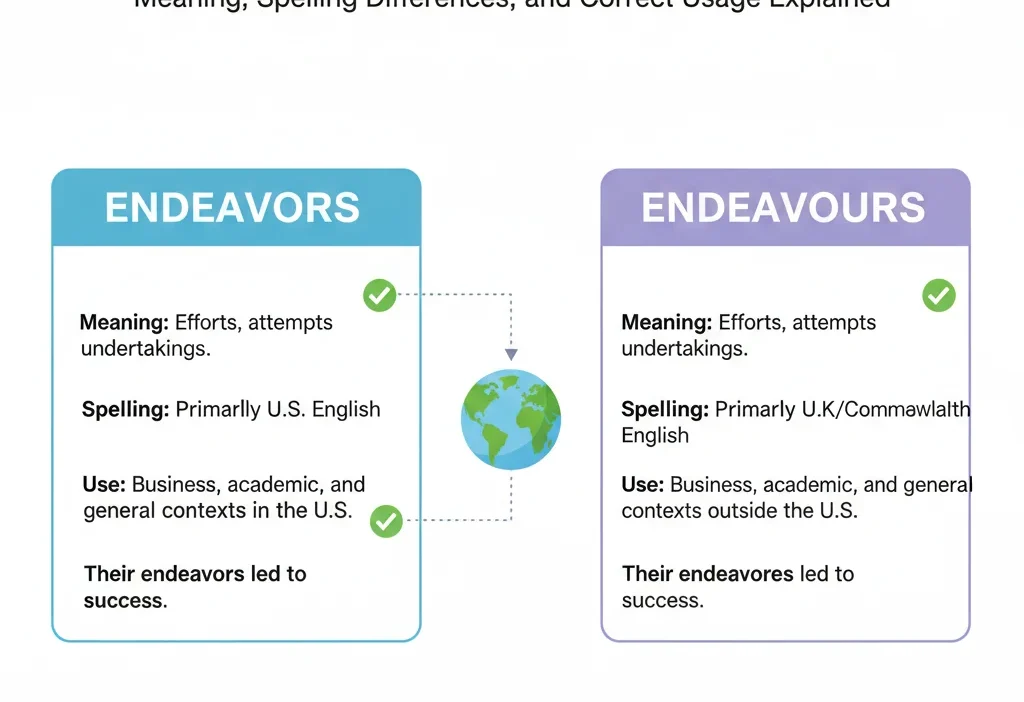
Both “endeavors” and “endeavours” are correct.
They mean serious efforts, attempts, or activities to achieve a goal.
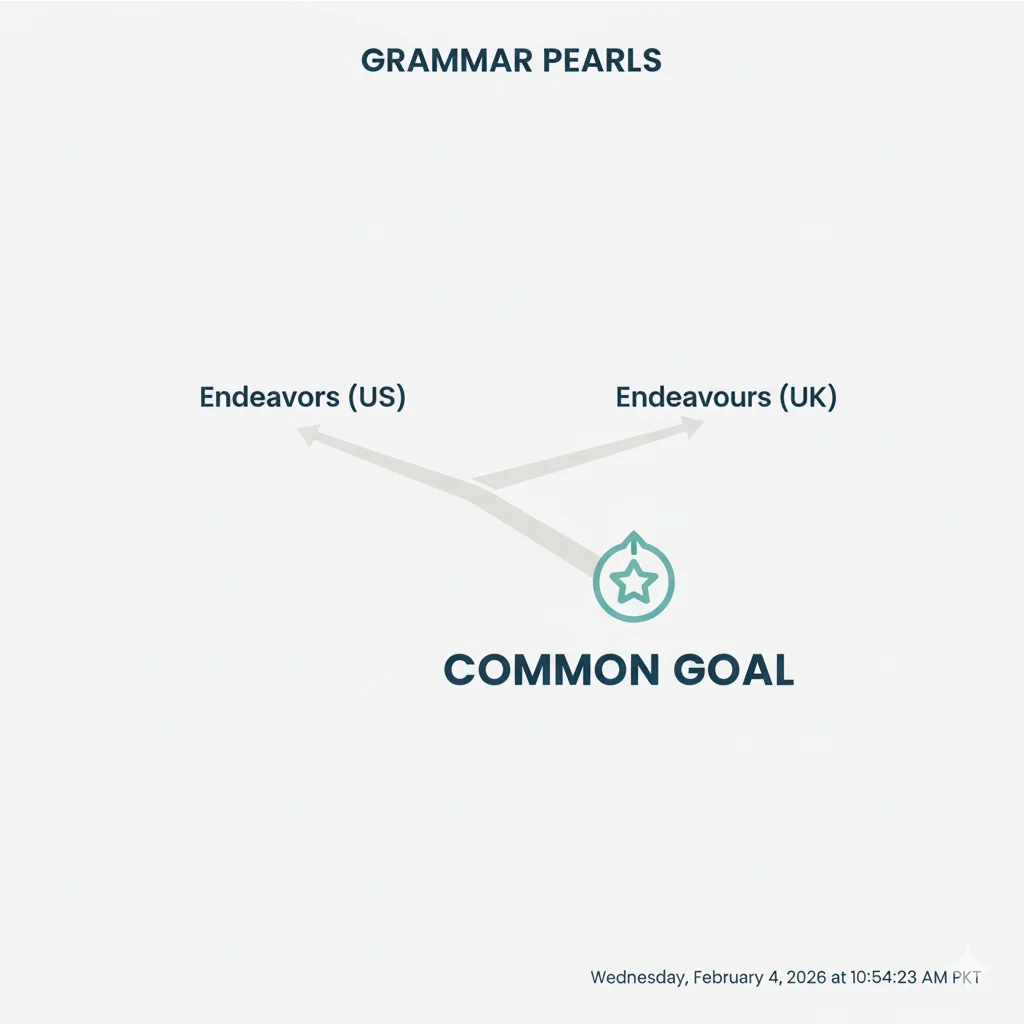
- Endeavors → American English spelling
- Endeavours → British English spelling
Examples:
- She succeeded in all her professional endeavors.
- The charity supports educational endeavours worldwide.
There is no difference in meaning, only spelling.
The Origin of Endeavors or Endeavours
The word endeavour comes from Old French “en devoir”, meaning to put into duty or effort. It entered English in the 14th century, originally spelled endevour.
Over time, British English kept the “-our” ending, while American English simplified many spellings in the 1800s under the influence of Noah Webster, who promoted shorter forms.
That’s why we have:
- Colour → Color
- Labour → Labor
- Endeavour → Endeavor
This historical spelling split explains why both forms exist today.
British English vs American English Spelling
Key Difference
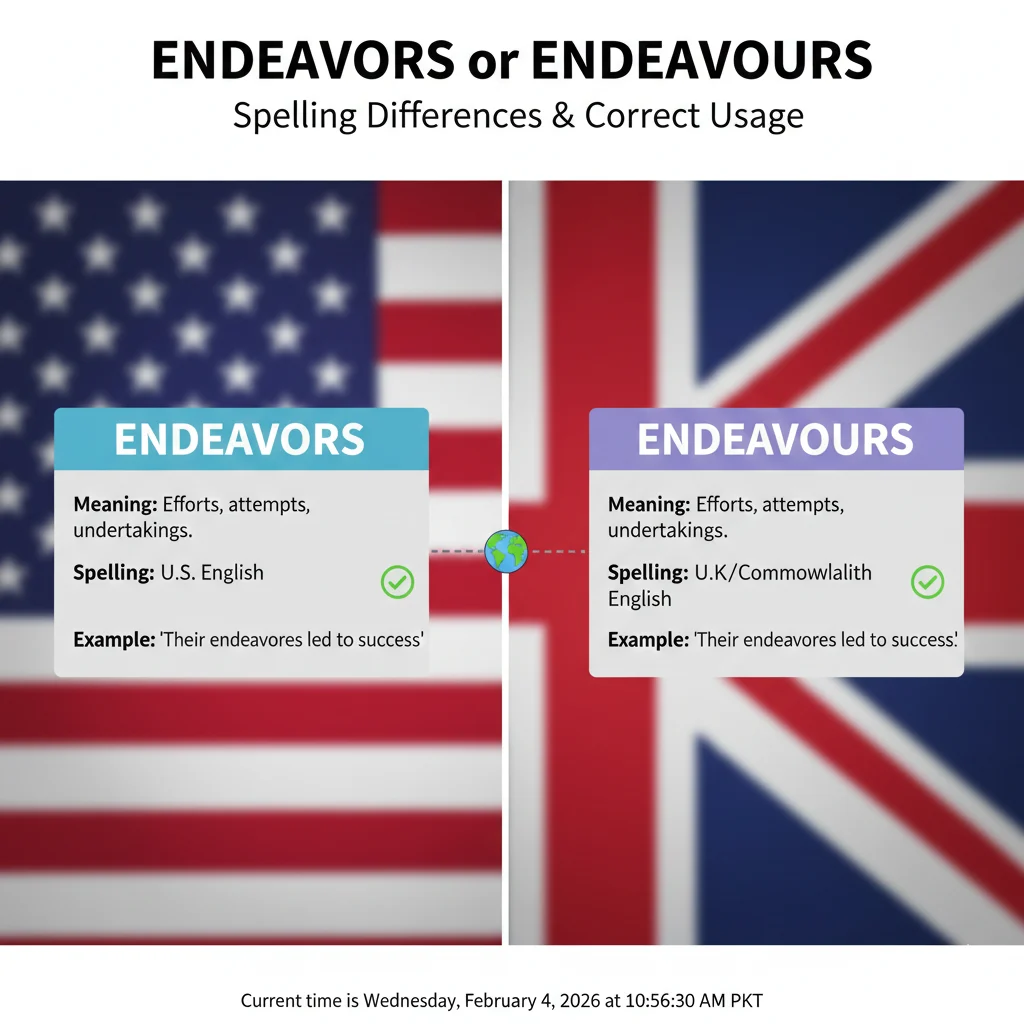
| Aspect | British English | American English |
|---|---|---|
| Spelling | Endeavours | Endeavors |
| Ending | -our | -or |
| Usage Regions | UK, Australia, Canada | United States |
| Meaning | Same | Same |
Examples:
- UK: He thanked everyone for their future endeavours.
- US: She was praised for her academic endeavors.
📌 Endeavour spelling UK always uses -our.
Which Spelling Should You Use?
Your choice depends on your audience.
- US audience → Use endeavors
- UK & Commonwealth audience → Use endeavours
- Global or international writing → Choose one style and stay consistent
Professional Tip:

If you’re writing:
- Academic papers → Follow the institution’s style guide
- Business emails → Match the region of the recipient
- SEO content → Use the spelling your target audience searches for
Both spellings are grammatically correct.
Common Mistakes with Endeavors or Endeavours
Here are frequent errors people make:
❌ Mixing spellings in the same document
✔️ Choose one and stay consistent
❌ Thinking one spelling is “wrong”
✔️ Both are correct, region-based
❌ Using the word for casual effort
✔️ It implies serious or meaningful effort
❌ Misspelling pronunciation
✔️ Endeavours pronunciation: /ɪnˈdɛvərz/
Endeavors or Endeavours in Everyday Examples
Emails
- Best wishes for your future endeavors.
- We appreciate your efforts and future endeavours.
News
- The company announced new scientific endeavors.
Social Media
- New chapter, new endeavors ahead!
Formal Writing
- The organization supports humanitarian endeavours worldwide.
Endeavors in a sentence:
- Her creative endeavors earned global recognition.
Endeavors or Endeavours – Google Trends & Usage Data
Search data shows:
- Endeavors is more popular in the United States
- Endeavours dominates in UK, Australia, and Canada
- Global searches include both spellings, depending on region
Common searches include:
- Which is correct, endeavours or endeavors?
- Is it correct to say future endeavors?
- What is the meaning of endeavours?
Both forms are widely accepted by Google and major dictionaries.
Comparison Table
| Variation | Region | Example |
|---|---|---|
| Endeavors | US | Academic endeavors |
| Endeavours | UK | Professional endeavours |
| Future endeavors or endeavours | Global | Career message |
| Endeavour meaning | All | Serious effort |
| Endeavors synonym | All | Efforts, attempts |
FAQs: Endeavors or Endeavours
1. Which is correct, endeavours or endeavors?
Both are correct. The difference is regional spelling only.
2. What is the meaning of Endeavours?
It means serious efforts or attempts to achieve something.
3. Is it correct to say future endeavors?
Yes. It’s commonly used to wish success in upcoming efforts.
4. How do you spell Endeavour in the UK?
The UK spelling is endeavour with -our.
5. What is an Endeavors synonym?
Efforts, attempts, pursuits, initiatives, undertakings.
6. Are endeavors formal or informal?
They are mostly formal or professional.
7. Do pronunciation and meaning change?
No. Only spelling changes by region.
Conclusion
The debate between endeavors or endeavours isn’t about correctness—it’s about location and audience. Both spellings share the same meaning: serious effort, commitment, and purposeful action. The only difference lies in British and American spelling conventions.
If you’re writing for a US audience, use endeavors. If your readers are in the UK or Commonwealth countries, endeavours is the right choice. For global writing, consistency matters more than the spelling itself.
Understanding this distinction helps you write with confidence, sound professional, and avoid unnecessary mistakes. Whether you’re wishing someone success in their future endeavors or endeavours, writing academic content, or publishing SEO articles, choosing the correct form strengthens clarity and credibility.
Now you know the meaning, history, usage, and best practices—use the word wisely and move forward confidently in all your writing endeavors

-
“Rachel Cusk spins stories with wit and flair, sprinkling puns and clever twists in every line—write: to form words, sentences, or text—making reading joyful!”