Have you ever been writing a report, a book, or even an email and paused, unsure if you need a foreword or you should move forward? You’re not alone. This common spelling and usage dilemma trips up thousands of writers every day
People search for “foreword vs forward” because they need a clear, reliable answer to avoid embarrassing mistakes in their professional or academic work. This confusion stems from their identical pronunciation, making them classic homophones
This article cuts through the ambiguity. We’ll solve the puzzle by explaining the distinct meanings, origins, and correct contexts for each word. By the end, you’ll have the confidence to use foreword and forward correctly every single time, ensuring your writing is precise and polished.
Foreword vs Forward
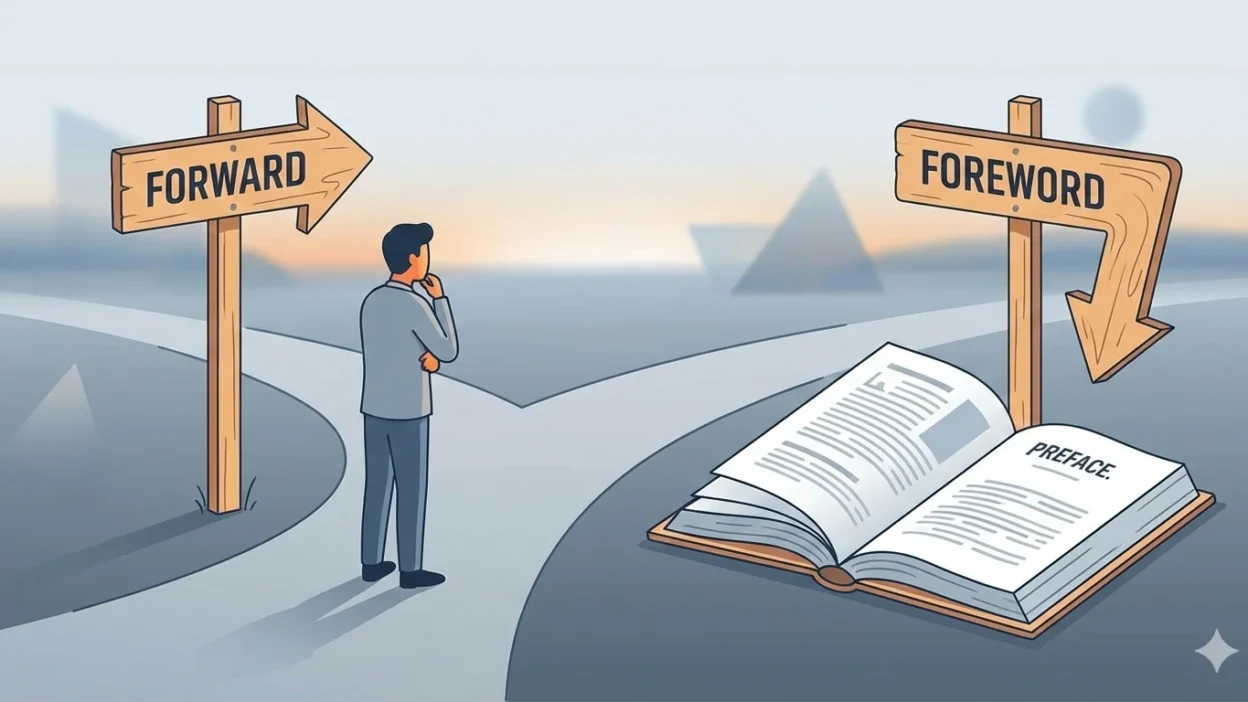
The quick answer is that a foreword is a noun meaning an introductory section of a book, written by someone other than the author. Forward is most commonly an adverb or adjective meaning toward the front or ahead in time/position.
Examples:
- Foreword: “The celebrity wrote a heartfelt foreword for the memoir.”
- Forward: “Please move forward in the line.” or “She is a forward-thinking leader.”
The Origin of Foreword and Forward
Understanding the origin explains the spelling difference. Foreword is a compound word from Old English: “fore-” (meaning before) + “word” (meaning speech or statement). It literally means “the words before” the main text. Forward also comes from Old English “foreweard,” a combination of “fore” and the suffix “-weard” (meaning in the direction of). Over centuries, “foreweard” evolved into “forward,” denoting direction. The spelling difference exists because, despite sounding the same, they were formed from different root constructions with distinct meanings.
British English vs. American English Spelling
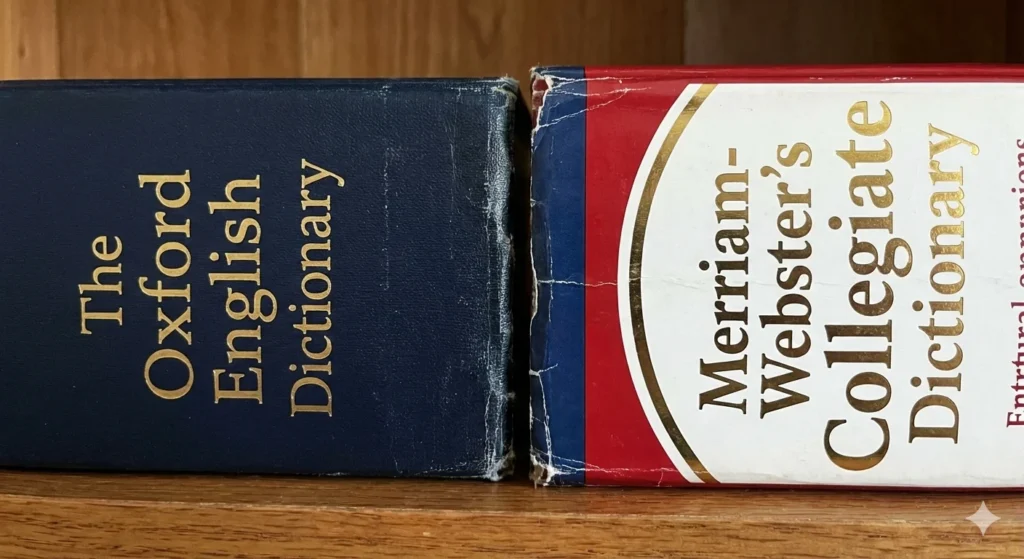
For the words foreword and forward, the spelling is consistent in both British and American English. The confusion is purely about which word to use, not how to spell each variant. However, a related point of spelling difference is the suffix “-ward” itself.
- In American English, the standard is -ward (forward, toward, backward, upward).
- In British English, the suffix -wards is often used as the adverb (forwards, towards, backwards, upwards), while -ward is more common as an adjective.
Comparison Table: Foreword vs. Forward
| Feature | Foreword | Forward |
|---|---|---|
| Part of Speech | Noun only. | Primarily adverb & adjective; also verb (to send on) & noun (sports position). |
| Meaning | An introduction to a book, by another person. | Direction: toward the front; ahead; onward. |
| Pronunciation | /ˈfɔːr.wɝːd/ (Identical) | /ˈfɔːr.wɝːd/ (Identical) |
| Example | “Check the foreword for context.” | “Move forward.” / “He plays forward.” / Forward the email.” |
| Spelling Variation | None. | US: forward, toward. UK: forward/forwards, toward/towards. |
Which Spelling Should You Use?
Your choice depends entirely on your intended meaning, not your location.
- For US & UK/Commonwealth Audiences: Use foreword only when referring to the introductory section of a book. Use forward (or forwards in UK adverbial sense) for all directional contexts.
- For Global/International English: The rule is universal. If you’re talking about a book’s introduction, it’s foreword. For every other context involving direction, progress, or sending something, it’s a form of forward.
- Key Tip: If you can replace the word with “ahead” or “onward,” you always need forward. If you’re talking about a book’s preface, you need foreword.
Common Mistakes with Foreword and Forward
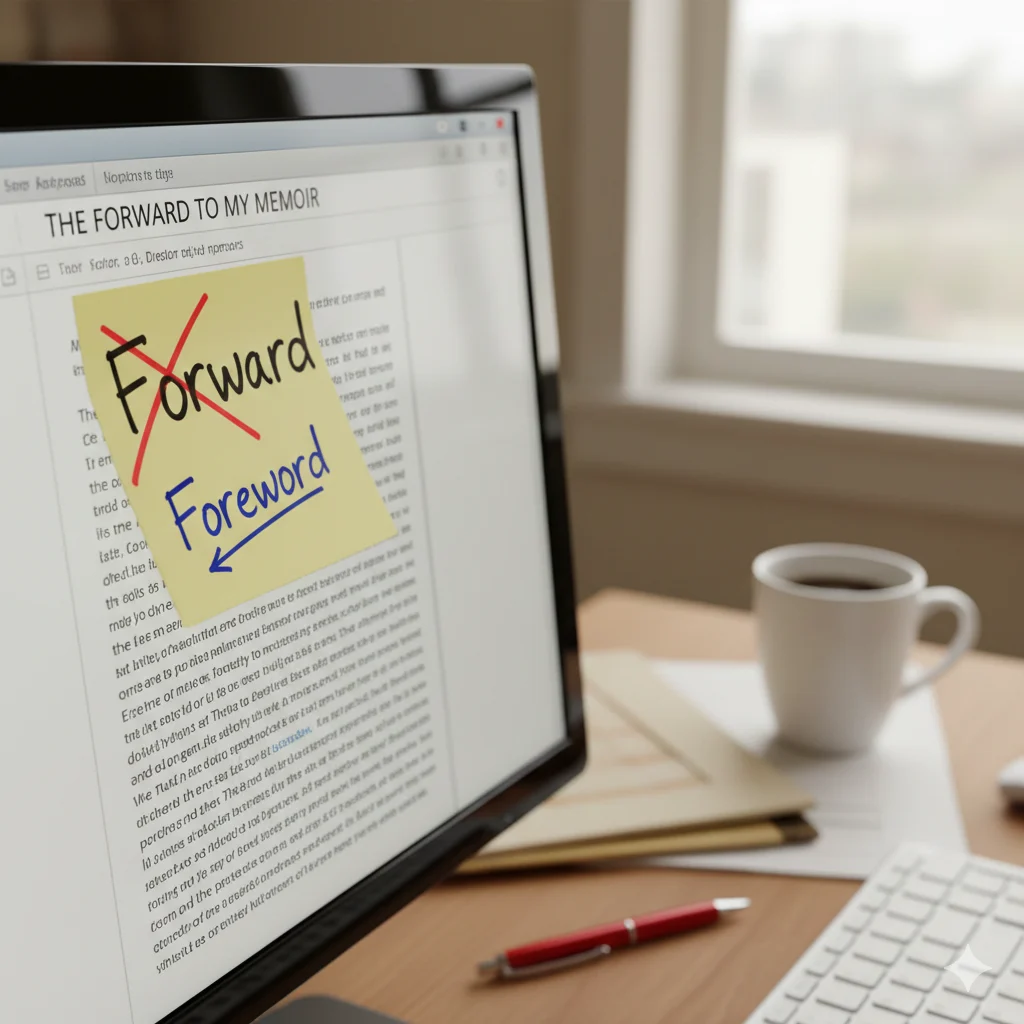
The most frequent error is using forward when foreword is needed, especially in writing.
- Incorrect: “The author’s forward explained her journey.” (Unless the author is moving ahead, this is wrong.)
- Correct: “The author’s foreword explained her journey.”
- Incorrect: “I loved the forward to this novel.”
- Correct: “I loved the foreword to this novel.”
- Remember: There is no such word as “foreward.” This common misspelling with an “a” is always incorrect.
Foreword and Forward in Everyday Examples
- Email (Professional): “Please forward this report to the team. Also, our annual booklet will include a foreword from the CEO.”
- Social Media: “Just read an insightful foreword by @Expert that perfectly frames the book’s themes. Time to move forward with my own project!”
- Formal Writing: “The treatise includes a foreword by a leading scholar. The study argues for a forward-looking policy approach.”
Foreword vs Forward – Google Trends & Usage Data
Google Trends data shows consistent global searches for “foreword definition” and “foreword pronunciation,” indicating ongoing confusion. Interest in “foreword” is higher in countries with strong literary publishing sectors.
The term “forward” is searched vastly more frequently worldwide due to its common use in sports, business, and daily life. This data underscores that “foreword” is a niche but persistently queried term, while “forward” is part of everyday vocabulary.
FAQs
What is the difference between forward and foreword?
A foreword is a book’s introduction. Forward means toward the front or ahead.
What’s the difference between forward and ahead?
They are often synonyms (e.g., move forward/ahead). “Ahead” can specifically mean in the lead or in the future, while “forward” emphasizes direction or progression.
What is the meaning of foreward?
“Foreward” is a common misspelling. The correct word is foreword.
What is the difference between a foreword and a preface?
A foreword is written by someone other than the book’s author. A preface is written by the author, explaining the book’s scope, origins, and acknowledgments.
Can ‘forward’ be used as a verb?
Yes. To forward something means to send it onward (e.g., “Forward the email to me.”).
How do you pronounce foreword and forward?
They are pronounced identically: /ˈfɔːr.wɝːd/ (FOR-wurd).
Is it ‘looking forward’ or ‘looking foreword’?
It is always “looking forward to…” when expressing anticipation. “Looking foreword” is incorrect unless you are literally searching for the introduction in a book.
Conclusion
Mastering the difference between foreword and forward is a small but significant step toward impeccable writing. Remember the core distinction: a foreword is exclusively a noun for a book’s introductory section. Forward is the versatile term for direction, progress, or the action of sending on. The pronunciation is identical, so always let context be your guide.
Whether you’re drafting an email, composing a formal document, or writing your own book, applying this simple rule will eliminate a common error and enhance your credibility. Keep this guide in mind, and you’ll always move forward with confidence, never mistaking it for the foreword.