Have you ever written a holiday message and suddenly paused?
Should it be joyous or joyful Christmas?
Do you write joyous or joyful New Year?
Is it better to say have a joyous day or joyful day?
You are not alone.
Thousands of people search “is it joyous or joyful” every year, especially during the holiday season. Both words look correct. Both relate to happiness. Yet they feel slightly different.
That small difference in tone can change how your message sounds — formal, emotional, warm, or celebratory.
This complete grammar comparison guide gives you:
- A quick answer
- Clear joyous or joyful meaning
- Real examples for daily use
- Formal vs informal tone advice
- Holiday greeting clarity
- Professional writing guidance
Let’s clear the confusion once and for all.
Joyous or Joyful means
Both joyous and joyful are correct English adjectives.
They both mean:
full of joy or happiness.
However, their tone and usage differ slightly.
Joyous Meaning
Joyous meaning: full of celebration, delight, or great happiness — often used for events and special occasions.
Examples:
- It was a joyous wedding ceremony.
- The crowd had a joyous celebration.
- Wishing you a joyous holiday season.
Joyful Meaning
Joyful meaning: feeling or expressing happiness — often used for people, emotions, and expressions.
Examples:
- She gave a joyful smile.
- The baby had a joyful laugh.
- Have a joyful day!
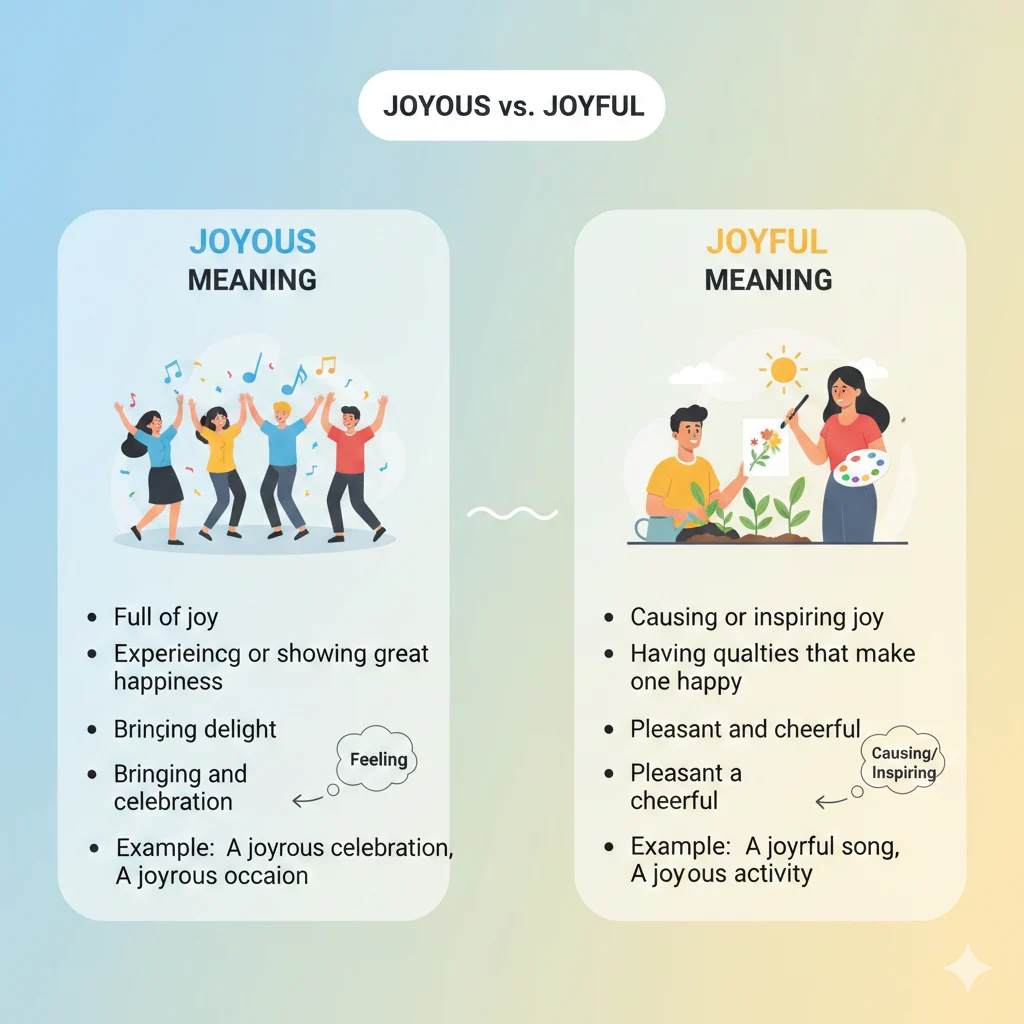
Quick Difference Table
| Word | Focus | Example |
|---|---|---|
| Joyous | Celebration | joyous Christmas |
| Joyful | Emotion | joyful heart |
So if you ask, “Do you say joyous or joyful?”
The answer is: Both are correct. Context matters.
The Origin of Joyous or Joyful
Both words come from the root word joy.
The word joy comes from:
- Old French: joie
- Latin: gaudia (meaning delight or pleasure)
English forms adjectives using common endings:
- -ous (famous, dangerous, glorious)
- -ful (hopeful, beautiful, careful)
So:
- Joy + ous = joyous
- Joy + ful = joyful
There is no spelling difference between British and American English. Both forms are standard and accepted in major dictionaries such as Merriam-Webster and Oxford English Dictionary.
Over time:
- Joyous developed a slightly formal, festive tone.
- Joyful became more personal and emotional.
That is why people still search:
“Is it joyous or joyful?”
The difference is about tone — not correctness.
British English vs American English Spelling
Unlike words such as color/colour or organise/organize, there is no spelling variation here.
Both American and British English use:
- Joyous
- Joyful
However, usage frequency can vary.
| Word | American English | British English | Tone Style |
|---|---|---|---|
| Joyous | Used | Used | Festive, formal |
| Joyful | Very common | Common | Emotional, warm |
In modern American writing, joyful appears slightly more often in daily content.
In greeting cards and traditional messages, joyous holiday season feels elegant and classic.

Emotional Depth vs Celebratory Tone
This is where the real difference appears.
Many users also ask:
What is the difference between joyful and happy?
Let’s simplify it:
- Happy = short-term emotion
- Joyful = deeper emotional state
- Joyous = full of celebration and shared happiness
Example:
You feel happy when you get good news.
You feel joyful when you hold your newborn baby.
A wedding is a joyous event.
So:
- Joyful → inside feeling
- Joyous → outward celebration
This small tone difference helps you choose correctly.
Which Should You Use in Greetings?
Let’s answer the common search questions clearly.
Joyous or Joyful Christmas?
Both are correct.
“Joyous Christmas” sounds traditional and festive.
“Joyful Christmas” sounds warm and emotional.
Joyous or Joyful New Year?
“Joyous New Year” is more common in formal greetings.
“Joyful New Year” is friendly but less traditional.
Joyous or Joyful Holiday Season?
“Joyous holiday season” sounds more elegant.
“Joyful holiday season” feels softer and personal.
Have a Joyous Day or Joyful Day?
“Have a joyful day” sounds natural in conversation.
“Have a joyous day” sounds slightly formal.
Audience-Based Advice
| Writing Context | Recommended Word |
|---|---|
| Casual speech | Joyful |
| Business email | Joyful |
| Greeting card | Joyous |
| Formal invitation | Joyous |
| Emotional storytelling | Joyful |
If unsure, remember:
Event → Joyous
Emotion → Joyful
Common Mistakes with Joyous or Joyful
1. Using Them as Nouns
Wrong:
- I felt so joyousness.
Correct:
- I felt joyful.
2. Overusing in Professional Writing
Instead of:
We are joyous to announce…
Better:
We are pleased to announce…
Professional writing prefers neutral tone.
3. Confusing Tone
“I feel joyous today” sounds formal.
“I feel joyful today” sounds natural.
Word choice clarity improves writing confidence and credibility.
Joyous or Joyful in Everyday Examples

Here are real-life usage examples:
- We wish you a joyous holiday season.
- Thank you for your joyful participation.
News Article
- The nation celebrated with a joyous parade.
- The fans gave a joyful welcome.
Social Media
- Feeling joyful today!
- Joyous New Year to everyone!
Formal Writing
- The ceremony was a joyous occasion.
- She expressed joyful gratitude.
These joyous or joyful examples show how context changes tone.
Joyous or Joyful Synonyms

Joyous or joyful synonyms:
- Happy
- Cheerful
- Jubilant
- Delighted
- Blissful
- Radiant
Joyful synonym (most common):
- Happy
- Cheerful
- Glad
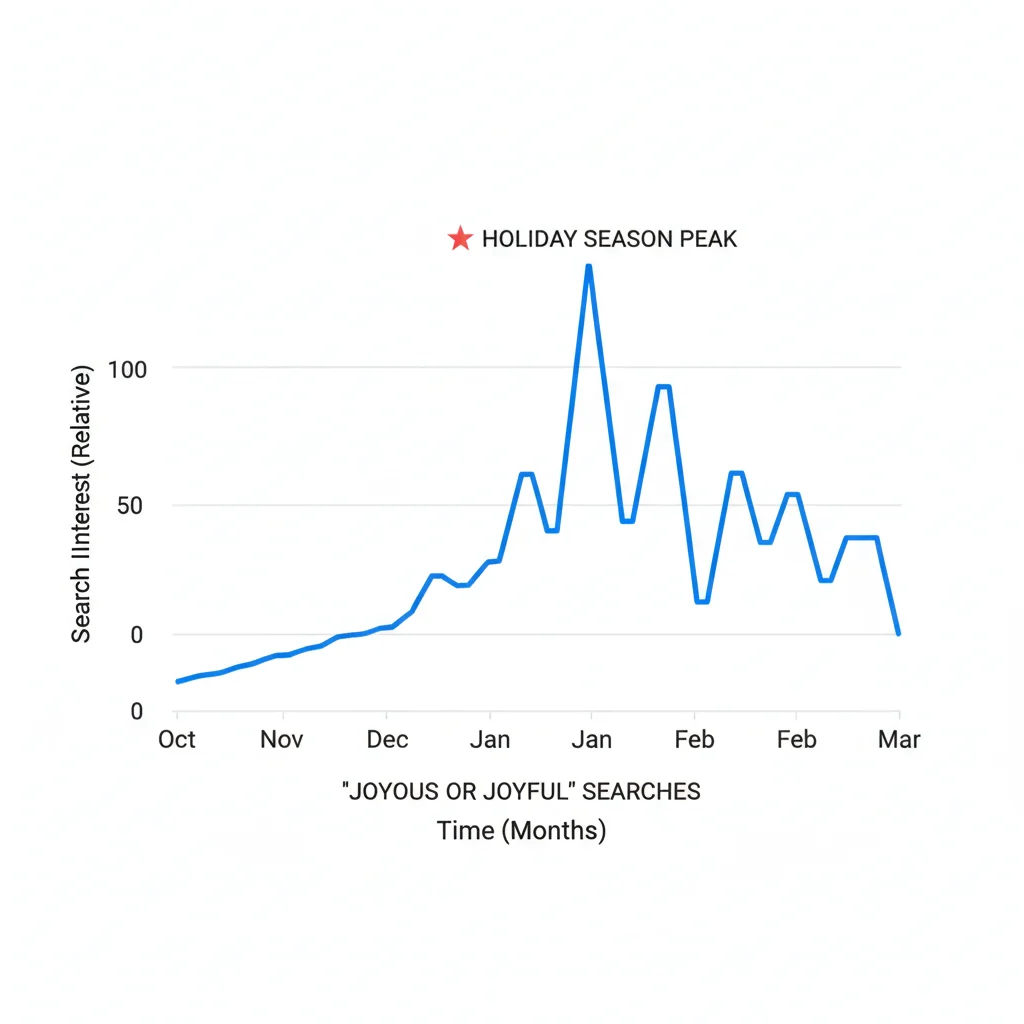
Joyous or Joyful – Google Trends & Usage Insights
Search interest increases sharply in November and December.
Popular search queries include:
- is it joyous or joyful
- joyous or joyful Christmas
- joyous or joyful New Year
- joyous or joyful holiday season
This shows strong seasonal intent.
Educational searches such as:
- joyful meaning
- joyous meaning
Remain steady throughout the year.
This pattern confirms that users mainly want greeting clarity and correct English usage before sending messages.
Final Comparison Table
| Feature | Joyous | Joyful |
|---|---|---|
| Meaning | Full of celebration | Feeling happiness |
| Tone | Festive, formal | Emotional, warm |
| Best Used For | Events | People & emotions |
| Common Phrase | joyous New Year | joyful smile |
| Interchangeable? | Often yes | Often yes |
FAQs
1. Is it joyous or joyful?
Both are correct adjectives. Context determines the better choice.
2. Do you say joyous or joyful Christmas?
Both are correct. “Joyous Christmas” sounds more traditional.
3. Joyous or joyful New Year?
“Joyous New Year” is more common in greeting cards.
4. What is the difference between joyful and happy?
Happy is temporary emotion. Joyful is deeper and more meaningful.
5. Is it joyful holiday or joyous holiday?
Both work. “Joyous holiday season” sounds more festive.
6. Have a joyous day or joyful day?
“Have a joyful day” sounds more natural in everyday speech.
7. Are joyous and joyful interchangeable?
Yes, in many cases. Tone and context matter most.
Conclusion
Now you know the clear answer.
There is no spelling conflict. Both words are correct in American and British English.
The real difference is tone.
Use joyous when describing:
- Celebrations
- Christmas
- New Year
- Holiday season
- Special occasions
Use joyful when describing:
- Emotions
- People
- Smiles
- Daily feelings
If you remember one simple rule:
Celebration → Joyous
Emotion → Joyful
That rule will guide you every time.
Correct word choice builds trust. Clear writing improves credibility. And now you can confidently choose between joyous or joyful in any situation.

-
“Rachel Cusk spins stories with wit and flair, sprinkling puns and clever twists in every line—write: to form words, sentences, or text—making reading joyful!”