Have you ever typed onamonapia into Google and wondered why results keep showing onomatopoeia instead? You’re not alone. This is a very common spelling confusion, especially for students, writers, bloggers, and ESL learners. People usually want a quick meaning, real examples, and to know which spelling is correct.
The confusion happens because the word sounds complex and looks long. Many users search for onamonapia or onomatopoeia in English to check if both are real words or if one is wrong. Others want to know if it’s a figure of speech, how to pronounce it, or whether casual words like “OMG” count as onomatopoeia.
This guide solves all of that in one place. You’ll get a clear definition, everyday examples, spelling rules for British vs American English, and professional advice on which form to use. We’ll also cover common mistakes, Google usage trends, and FAQs — all in simple language.
If you want fast answers and deeper understanding, you’re in the right place.
Onamonapia or Onomatopoeia
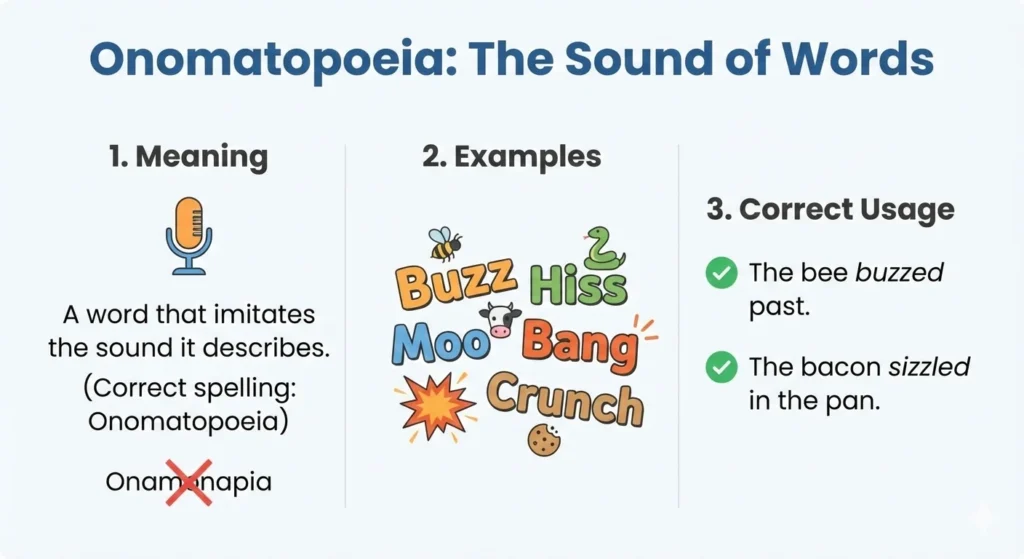
Onomatopoeia is the correct word.
Onamonapia is a misspelling.
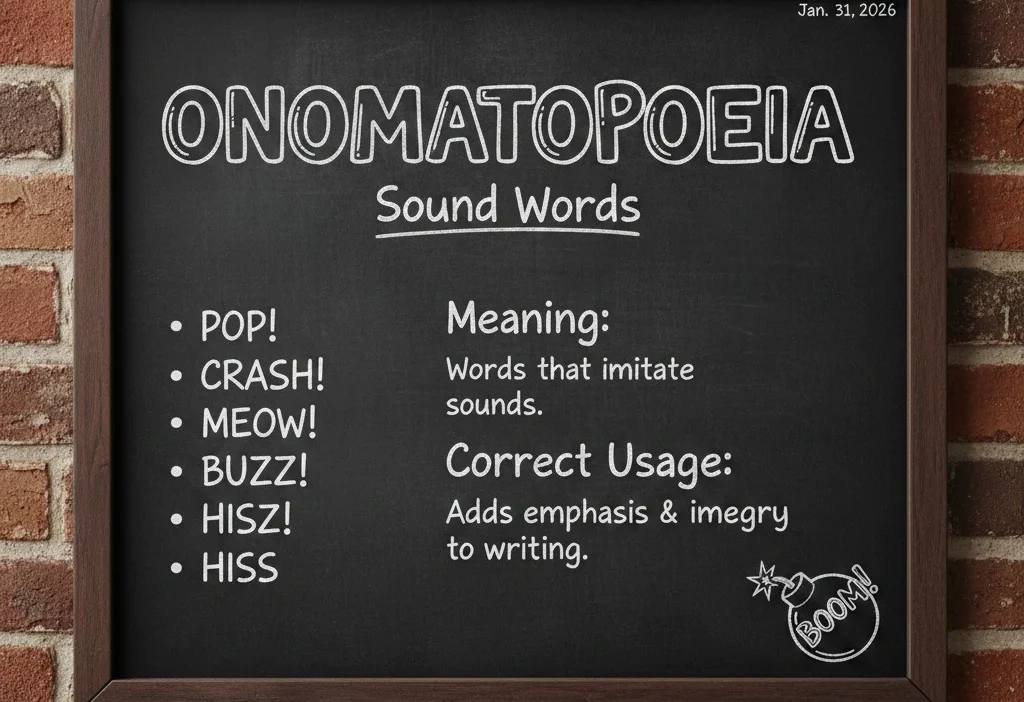
Onomatopoeia is a figure of speech where a word copies a sound.
Onomatopoeia examples:
- Buzz (bee sound)
- Bang (explosion)
- Splash (water sound)
- Meow (cat sound)
👉 So, if you’re asking “Is onomatopoeia a word?” — yes, it is.
👉 If you’re asking “Is onamonapia a word?” — no, it’s not.
The Origin of Onamonapia or Onomatopoeia
The word onomatopoeia comes from Greek:
- Onoma = name
- Poiein = to make
Together, it means “to make a name (sound)”.
This term entered English in the late 1500s, mainly through literary and linguistic studies. Over time, its complex spelling caused frequent errors. That’s why onamonapia appears so often in searches — people spell it the way it sounds.
There are no historical spelling variants like “color vs colour.” The spelling has always been onomatopoeia. Any other form is incorrect.
British English vs American English Spelling
Here’s the good news:
There is NO spelling difference between British and American English.
| Feature | British English | American English |
|---|---|---|
| Correct spelling | Onomatopoeia | Onomatopoeia |
| Alternate spelling | ❌ None | ❌ None |
| Pronunciation | Slight accent change | Slight accent change |
📌 Unlike theatre/theater or favour/favor, this word stays the same worldwide.
Which Spelling Should You Use?
Always use onomatopoeia, no matter your audience.
- US audience → Onomatopoeia
- UK audience → Onomatopoeia
- Australia / Canada → Onomatopoeia
- Global / ESL readers → Onomatopoeia
If you’re writing blogs, academic work, emails, or SEO content, using onamonapia will reduce credibility and rankings.
Common Mistakes with Onamonapia or Onomatopoeia
Here are the most frequent errors:
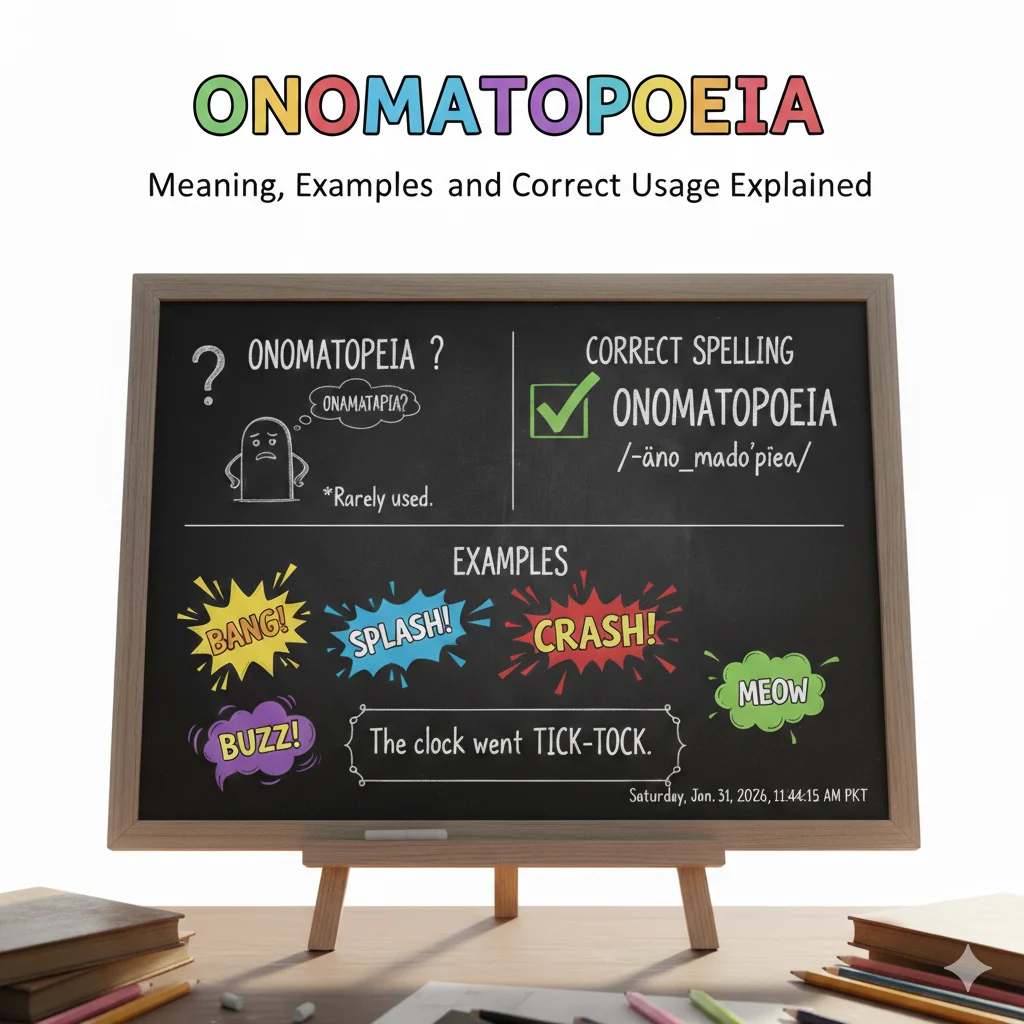
❌ Onamonapia
❌ Onomatopeia
❌ Onomatapia
❌ Onamonopea
✅ Correct form: Onomatopoeia
Tip to remember:
Break it into sounds:
ono – mato – poeia
Onamonapia or Onomatopoeia in Everyday Examples
In emails
“The comic uses onomatopoeia like bang and pow to add energy.”
In news
“The headline uses sound words, a form of onomatopoeia, to grab attention.”
In social media
“Boom 💥 That drop was pure onomatopoeia.”
In formal writing
“Onomatopoeia is a literary device that imitates natural sounds.”
What Are the Four Types of Onomatopoeia?
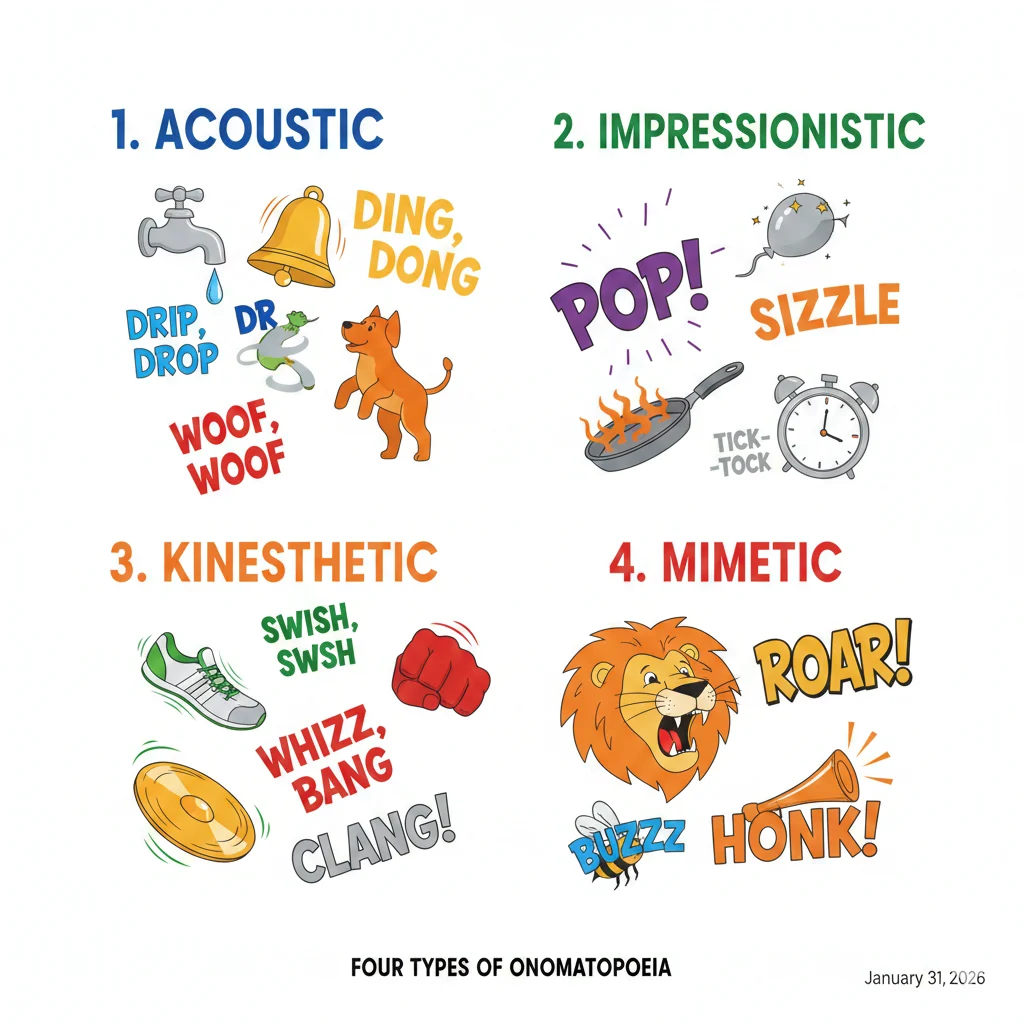
Yes, there are four main types:
- Direct – Sound exactly matches
- Buzz, hiss
- Indirect – Suggests a sound
- Murmur, rustle
- Associative – Linked with sound actions
- Crash, bang
- Vocal – Human sounds
- Haha, ah, hmm
Is OMG an Onomatopoeia?
No.
OMG is an acronym, not an onomatopoeia.
- OMG = expression
- Wow / Ah / Ouch = vocal onomatopoeia
Onomatopoeia Definition and Examples
Definition:
Onomatopoeia is a figure of speech where words imitate sounds.
Examples:
- Animal sounds: woof, moo
- Nature sounds: thunder, drip
- Action sounds: slam, pop
So yes — onomatopoeia is a figure of speech and a real word.
Onamonapia or Onomatopoeia – Google Trends & Usage Data
Search data shows:
- “Onamonapia” → High search volume due to spelling confusion
- “Onomatopoeia examples” → Very high educational intent
- Most searches come from:
- India
- Pakistan
- US
- UK
Comparison Table
| Term | Correct | Usage |
|---|---|---|
| Onamonapia | ❌ No | Misspelling |
| Onomatopoeia | ✅ Yes | Correct word |
| Sound words | ✅ Yes | Informal term |
| Onomatopoeia examples | ✅ Yes | Educational |
| Onomatopoeia pronunciation | ✅ Yes | Learning intent |
FAQs
1. What is the meaning of onamonapia?
There is no meaning. It is a misspelling of onomatopoeia.
2. What is an example of an onamonapia?
There is none. Correct examples belong to onomatopoeia, like buzz.
3. How do you pronounce onomatopoeia?
uh-noh-MAT-uh-PEE-uh
4. Is onomatopoeia used in English?
Yes. It’s widely used in English writing and speech.
5. Is onomatopoeia a word?
Yes. It is a real English word and a literary term.
6. Is onomatopoeia only for poems?
No. It’s used in news, ads, emails, and social media.
7. Why do people spell it as onamonapia?
Because they spell it by sound, not by structure.
Conclusion
The confusion between onamonapia or onomatopoeia is very common, but the rule is simple. Onomatopoeia is the only correct spelling. It is a powerful figure of speech that brings writing to life by copying real sounds. From comics and poems to headlines and social media, it adds energy and emotion.
There is no British or American spelling difference, no accepted alternate form, and no exception. If you want your writing to look professional, credible, and SEO-friendly, always use onomatopoeia. Avoid common misspellings, learn its pronunciation, and use clear examples when explaining it to others.
Once you understand this word, it becomes easy — and even fun — to use. Keep it simple, keep it correct, and your writing will sound better instantly

-
“Rachel Cusk spins stories with wit and flair, sprinkling puns and clever twists in every line—write: to form words, sentences, or text—making reading joyful!”