You may have seen “schpiel” and “spiel” used online and wondered which spelling is correct. This confusion is common because the word comes from German and Yiddish, and English adopted it with slight spelling variations. Writers, students, and bloggers often search “schpiel or spiel” to know which one they should use in emails, articles, or professional writing.
Here is the quick truth: “spiel” is the correct and standard English spelling, while “schpiel” and “shpiel” are informal variants influenced by Yiddish pronunciation. The word usually refers to a rehearsed speech, sales pitch, or long explanation someone repeats often.
For example, a salesperson might give a short spiel about a product, or a tour guide might deliver the whole spiel about a historical place.
This guide will explain:
- The correct spelling and schpiel pronunciation
- The spiel origin and Yiddish connection
- Real examples of spiel in a sentence
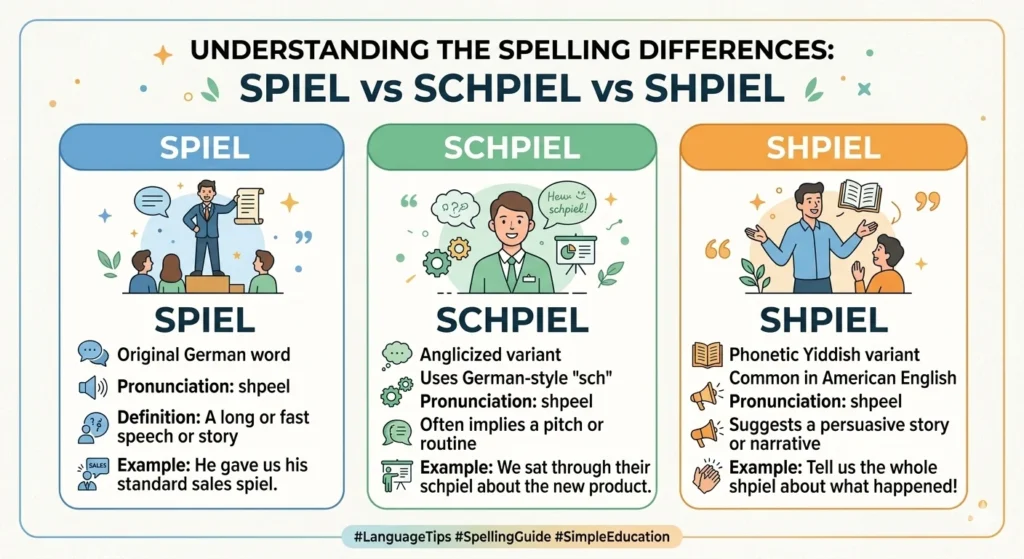
- Differences between spiel, schpiel, and shpiel
- Common mistakes and professional writing advice
By the end, you will clearly know which spelling to use and why “spiel” is preferred in modern English.
Schpiel or Spiel means
The correct spelling in English is “spiel.”
Schpiel and shpiel are alternative spellings influenced by Yiddish pronunciation, but they are rarely used in formal writing.
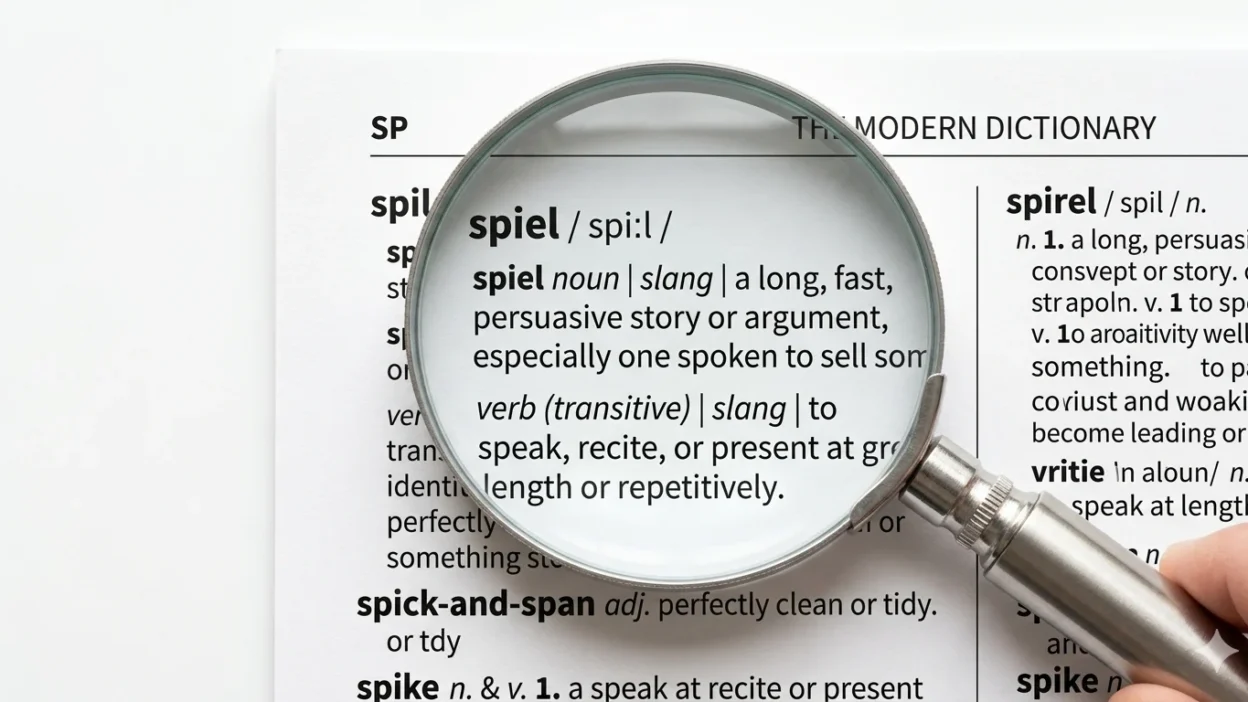
Dictionary Definition
Spiel (noun)
Meaning: A long speech, explanation, or sales pitch that someone repeats often.
Pronunciation: /ʃpiːl/ (sounds like shpeel)
According to major dictionaries such as Merriam-Webster and Oxford, spiel is the accepted English spelling.
Quick Examples
- The salesman gave his usual spiel about the product.
- I’ve heard that marketing spiel before.
- The tour guide started his historical spiel.
The Whole Spiel Meaning
The phrase “the whole spiel” means the complete explanation or story someone gives, often with many details.
Example:
She told me the whole spiel about the project.
The Origin of Schpiel or Spiel
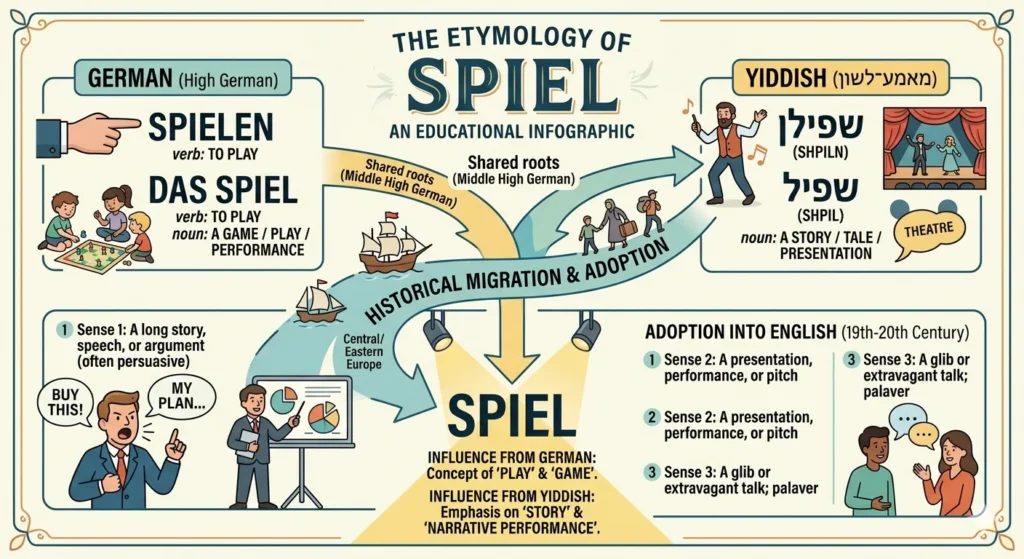
The spiel origin comes from German and Yiddish languages.
The German verb “spielen” means “to play.” Over time, the noun “spiel” began to mean a speech, performance, or presentation.
Later, the word entered Yiddish, where it became “shpiel.”
Shpiel in Yiddish
In Yiddish culture, shpiel often refers to:
- A humorous performance
- A theatrical speech
- A storytelling act
For example, a Purim shpiel is a comedic performance based on the Jewish holiday Purim.
Why Different Spellings Exist
When the word moved into English, people tried to represent the “sh” sound in different ways.
| Spelling | Language Influence | Usage |
|---|---|---|
| Spiel | German → Standard English | Most common |
| Shpiel | Yiddish | Cultural contexts |
| Schpiel | Informal spelling | Rare |
Today, spiel is the official English spelling used in dictionaries and professional writing.
British English vs American English Spelling
Many English words change spelling between British and American English. However, spiel is spelled the same in both versions of English.
Spelling Comparison
| Region | Preferred Spelling | Example |
|---|---|---|
| United States | Spiel | The guide gave his usual spiel. |
| United Kingdom | Spiel | I heard the same marketing spiel again. |
| Cultural Yiddish use | Shpiel | The theater performed a Purim shpiel. |
| Informal internet spelling | Schpiel | Rarely used |
Which Spelling Should You Use?
For most situations, spiel is the best choice.
Use “Spiel” for
- Blog posts
- Articles and journalism
- Academic writing
- Emails and business communication
- SEO content
Example:
The manager gave a motivational spiel during the meeting.
Use “Shpiel” for
- Cultural discussions about Yiddish theater
- References to Purim shpiel performances
Avoid “Schpiel” when
- Writing professionally
- Publishing articles
- Creating SEO content
Using spiel keeps your writing clear, professional, and correct.
Common Mistakes with Schpiel or Spiel
Many writers make small mistakes when using the word.
Mistake 1: Writing “schpiel” as the standard spelling
❌ The salesman gave his schpiel.
✔ The salesman gave his spiel.
Mistake 2: Thinking the pronunciation changes
People often ask:
“Is spiel or schpiel pronounced differently?”
No. The schpiel pronunciation and spiel pronunciation are identical.
Correct pronunciation:
/ʃpiːl/ → sounds like shpeel
Mistake 3: Using the word incorrectly
Remember that spiel means a repeated speech or explanation.
Incorrect:
❌ He wrote a spiel poem.
Correct:
✔ He gave a short spiel about the product.
Schpiel or Spiel in Everyday Examples
You can hear the word spiel in everyday conversations.
Email Example
“Before the presentation begins, the sales team will give a short spiel about the new service.”
News Example
“The politician delivered his campaign spiel to the crowd.”
Social Media Example
“Another marketing spiel in my inbox this morning!”
Workplace Example
“The tour guide started his historical spiel about the castle.”
Formal Writing Example
“The speaker presented a detailed spiel explaining the company strategy.”
Spiel in a Sentence
- The recruiter gave a quick spiel about company benefits.
- I’ve heard his sales spiel many times.
- She repeated the same spiel to every customer.
Spiel – Google Trends & Usage Data
Search behavior shows that “spiel” is significantly more popular than “schpiel.”
Global Search Trends
| Country | Usage Level |
|---|---|
| United States | Very High |
| United Kingdom | High |
| Canada | Moderate |
| Australia | Moderate |
| Global searches | Mostly “spiel” |
The spelling schpiel appears mainly in:
- Blogs
- Online forums
- Informal writing

Keyword Comparison Table
| Word | Meaning | Typical Context |
|---|---|---|
| Spiel | A rehearsed speech or sales pitch | Standard English |
| Shpiel | Yiddish performance or speech | Cultural usage |
| Schpiel | Informal spelling variant | Rare |
| The whole spiel | Full explanation | Everyday phrase |
| Short spiel | Brief pitch or speech | Informal conversation |
FAQs About Schpiel or Spiel
1. Is spiel or schpiel pronounced?
Both are pronounced “shpeel.”
The phonetic spelling is /ʃpiːl/.
2. What does spiel mean in slang?
In slang, spiel means a long persuasive talk or repeated explanation, often used by salespeople or promoters.
Example:
He started his marketing spiel again.
3. What is the whole spiel meaning?
“The whole spiel” means the complete story or explanation someone tells, often with many details.
Example:
She told me the whole spiel about her new job.
4. What does schpiel mean in Yiddish?
In Yiddish culture, shpiel refers to a humorous speech, performance, or theatrical storytelling act.
5. What is Shpeel?
Shpeel is simply another way to spell shpiel, reflecting the same pronunciation.
6. What is a spiel synonym?
Common spiel synonyms include:
- pitch
- speech
- talk
- presentation
- explanation
7. How do you use spiel in a sentence?
Example sentences:
- The tour guide began his usual spiel.
- The salesman repeated his short spiel.
- She delivered a motivational spiel to the team.
Conclusion
The spelling “spiel” is the correct and widely accepted form in English. While you may occasionally see schpiel or shpiel, these versions come from Yiddish pronunciation and are usually informal or cultural variations.
In everyday English, spiel refers to a rehearsed speech, persuasive talk, or detailed explanation. You might hear a tour guide give a historical spiel, a salesperson deliver a product pitch, or a speaker share the whole spiel about a topic.
For writers, bloggers, and professionals, the safest and most recommended spelling is spiel because dictionaries, style guides, and search engines recognize it as the standard form. Using the correct spelling improves clarity, credibility, and SEO performance in articles and online content.
Understanding the spiel origin, pronunciation, and real-life usage helps you choose the right word confidently. When writing for a global audience, remember this simple rule: use “spiel” for standard English, and reserve “shpiel” only for specific cultural contexts.

-
“Rachel Cusk spins stories with wit and flair, sprinkling puns and clever twists in every line—write: to form words, sentences, or text—making reading joyful!”