
English learners and even native speakers often confuse vary or very because they look and sound similar, but their meanings are completely different. One small spelling mistake can change the meaning of your sentence or make it sound incorrect. This is why people frequently search for vary or very meaning, vary or very grammar, and vary or very examples.
The confusion usually happens in fast writing—emails, social media posts, captions, or even professional documents. For example, writing “Prices very by location” instead of “Prices vary by location” can hurt clarity and credibility. On the other hand, using vary when you mean very makes your sentence sound awkward and wrong.
This article solves that confusion once and for all. You will learn the difference between vary and very, their grammar rules, pronunciation, synonyms, and real-life examples. You will also discover which word to use in formal writing, how Google trends show their usage, and common mistakes to avoid.
If you want quick answers, clear rules, and confident usage—this guide is for you.
Vary or Very Means
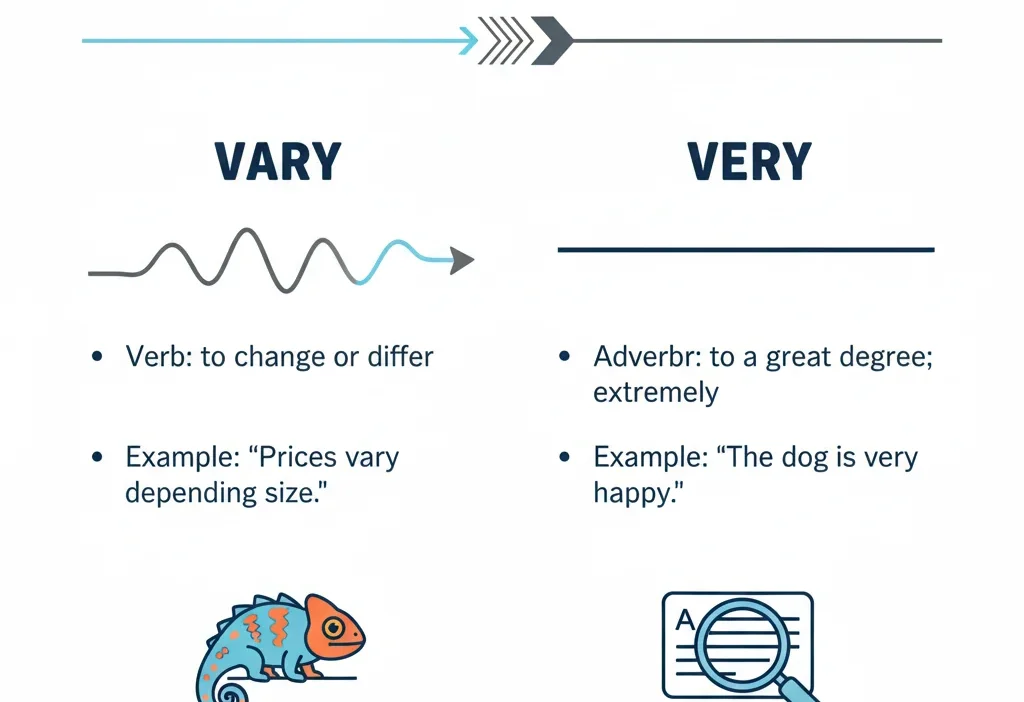
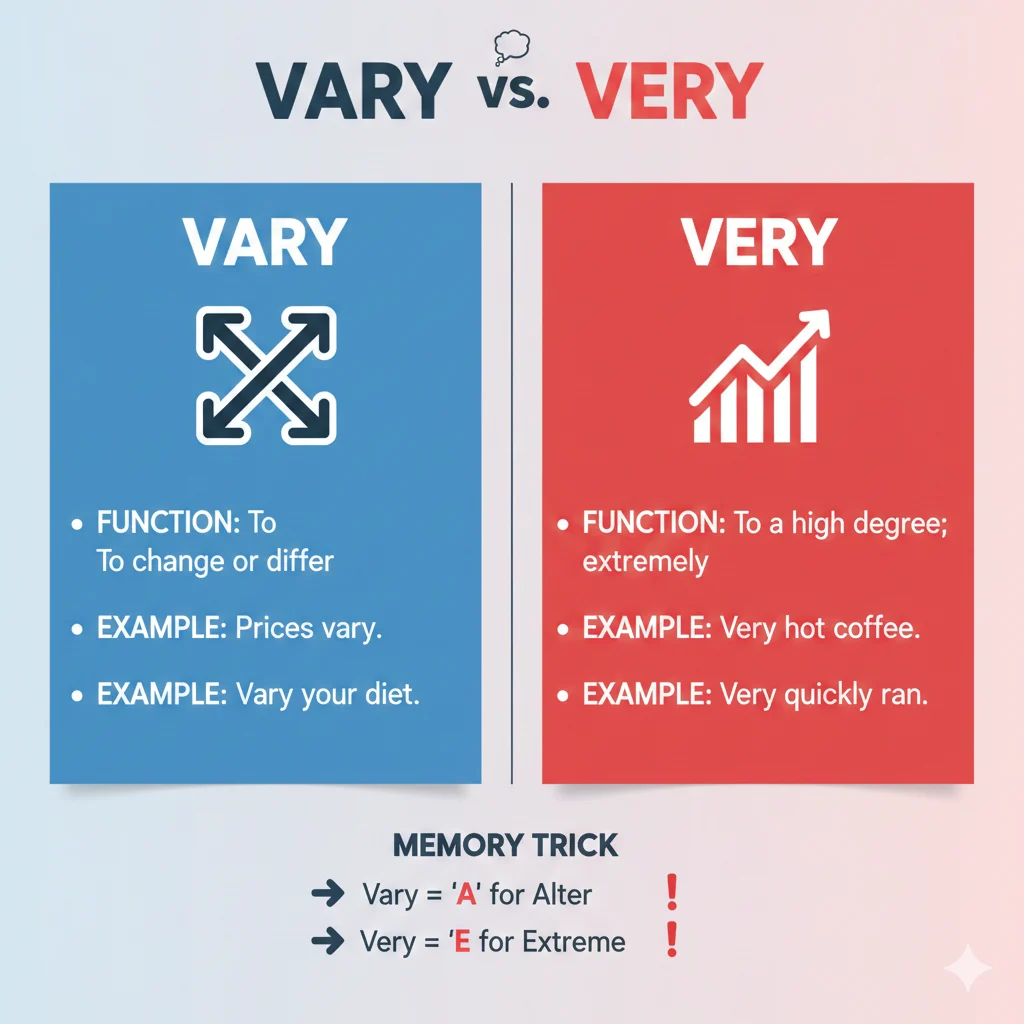
Vary is a verb. It means to change or to be different.
Very is an adverb. It means to a high degree or extremely.
Examples:
- Prices vary by country.
- She is very happy today.
- Results may vary.
- That movie was very interesting.
👉 Quick rule:
If you talk about change or difference, use vary.
If you add strength or intensity, use very.
The Origin of Vary or Very
The words vary and very come from different language roots, which explains why their meanings are not related.
Vary comes from the Latin word variāre, meaning to change or alter. Over time, it entered Middle English as varien and kept the idea of difference and change.
Very comes from Old French verai, meaning true or real. Later, English speakers used it to intensify adjectives, turning it into an adverb meaning extremely.
Even though the spellings look close today, their histories are completely separate. This historical difference explains why vary meaning and very meaning never overlap.
British English vs American English Spelling
Good news: There is no spelling difference between British and American English for vary or very.
Both forms are spelled the same in:
- British English
- American English
- Australian English
- Canadian English
Comparison Table: British vs American Usage
| Word | British English | American English | Meaning |
|---|---|---|---|
| Vary | Vary | Vary | To change or differ |
| Very | Very | Very | Extremely |
👉 The confusion is not regional. It is purely grammar-based.
Which Spelling Should You Use?
You should choose based on meaning, not location.
- US audience → Use vary for change, very for intensity
- UK / Commonwealth → Same rule
- Global English → Same rule everywhere
Simple decision tip:
Ask yourself:
❓ Is something changing? → Vary
❓ Am I making something stronger? → Very
Common Mistakes with Vary or Very
These mistakes appear often in blogs, ads, and emails.
❌ Wrong → ✅ Correct
- ❌ Prices very depending on demand
✅ Prices vary depending on demand - ❌ I am vary happy
✅ I am very happy - ❌ Styles very by region
✅ Styles vary by region - ❌ The weather is vary hot
✅ The weather is very hot
👉 These errors usually happen because people confuse sound with function.
Vary or Very in Everyday Examples
Emails
- Prices may vary based on availability.
- Thank you very much for your message.
News Writing
- Results can vary from state to state.
- The event was very successful.
Social Media
- Experiences may vary 😊
- This product is very popular right now!
Formal Writing
- Performance may vary under different conditions.
- This issue is very important.
Vary or Very Grammar Explained Simply
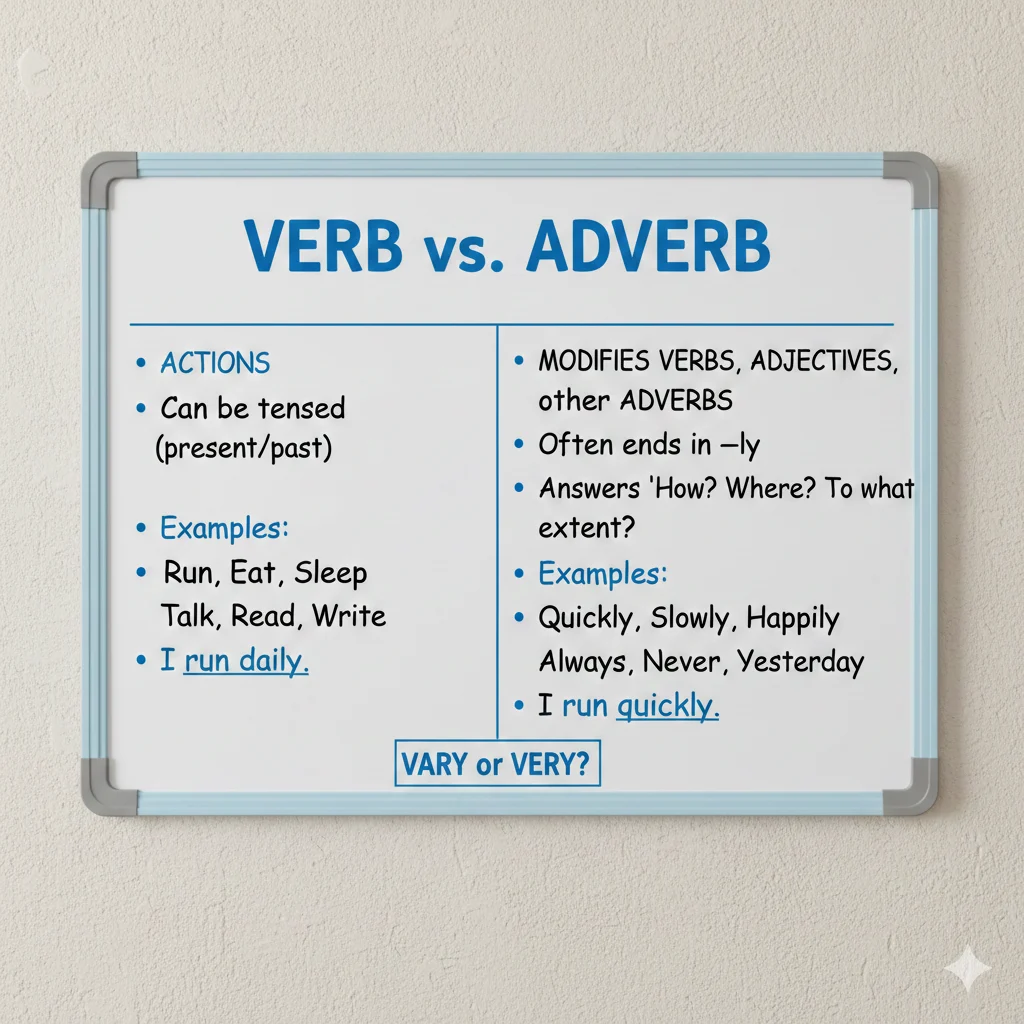
Vary – Grammar
- Part of speech: Verb
- Forms: vary, varies, varied, varying
How do you use vary?
- Things vary by time.
- Prices vary from shop to shop.
Very – Grammar
- Part of speech: Adverb
- Used before adjectives or adverbs
Examples
- Very good
- Very fast
- Very important
👉 You cannot use very as a verb.
Vary and Very Pronunciation Guide
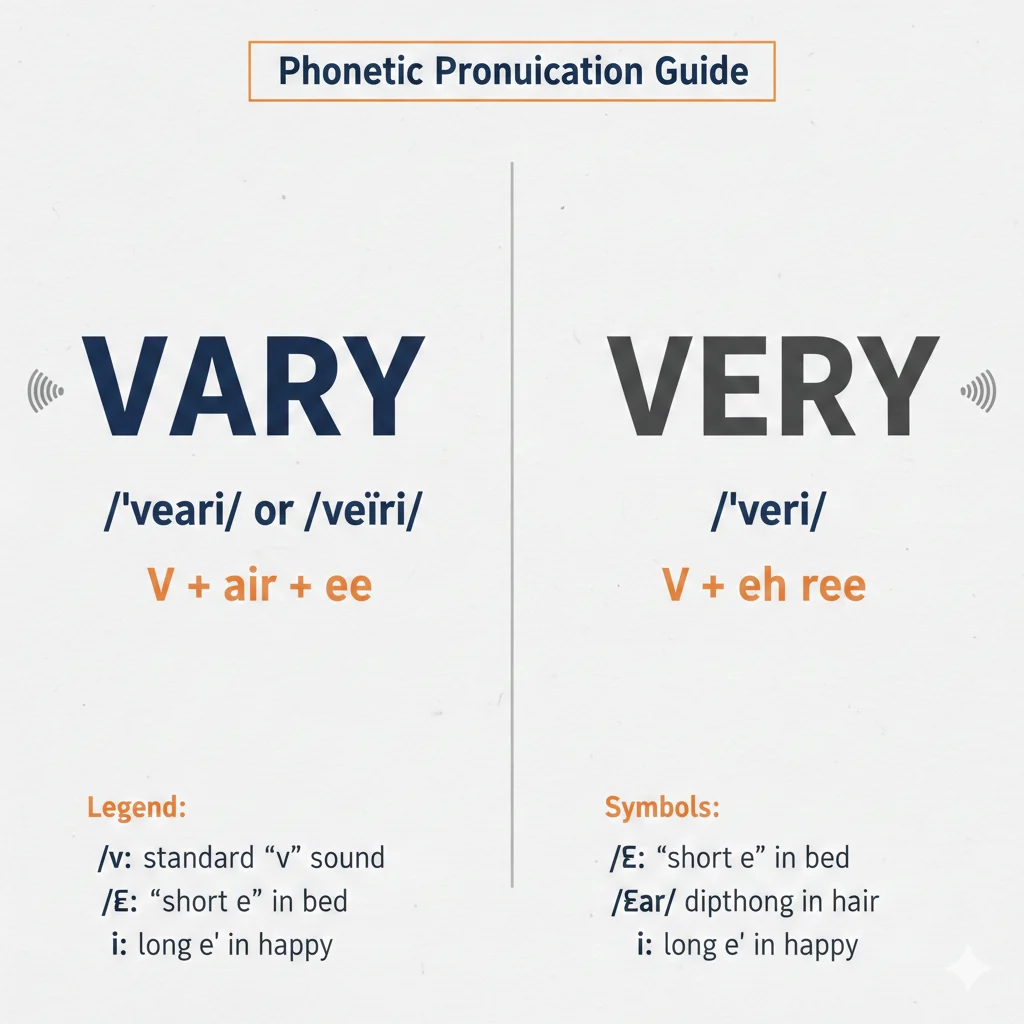
How to pronounce vary
- Pronunciation: VAIR-ee
- Sounds like: fair-ee
Very pronunciation
- Pronunciation: VER-ee
- Sounds like: berry
Vary and very pronunciation comparison
| Word | Pronunciation |
|---|---|
| Vary | VAIR-ee |
| Very | VER-ee |
Pronouncing them clearly helps reduce writing mistakes.
What Is the Difference Between Vary and Wary?
This is another common confusion.
- Vary → to change
- Wary → careful or cautious
Example:
- Prices vary.
- Be wary of scams.
Vary or Very – Google Trends & Usage Data
Search behavior shows:
- “Very” is more common in everyday speech and social media.
- “Vary” appears more in formal writing, research, and business content.
Usage by country:
- US & UK → High use of both
- Academic & professional fields → More use of vary
- Casual writing → More use of very
Google trends confirm that vary or very grammar and vary or very meaning are frequent learner searches worldwide.
Comparison Table: Vary vs Very
| Feature | Vary | Very |
|---|---|---|
| Part of speech | Verb | Adverb |
| Meaning | To change | Extremely |
| Shows action | Yes | No |
| Used with adjectives | No | Yes |
| Common error | Used instead of very | Used instead of vary |
FAQs About Vary or Very
1. What do you mean by vary?
Vary means to change or be different in amount, type, or level.
2. What’s a better word than “very”?
Better options include extremely, highly, truly, or deeply, depending on context.
3. Are vary and very interchangeable?
No. They have different meanings and grammar rules.
4. Is “very” bad in writing?
Not wrong, but overusing it can weaken writing. Use synonyms when possible.
5. How do you use vary in a sentence?
Prices vary by location.
6. Is vary a noun?
No. Vary is always a verb.
7. Can pronunciation help avoid mistakes?
Yes. Vary (VAIR-ee) and Very (VER-ee) sound different when spoken clearly.
Conclusion
Understanding the difference between vary or very is simple once you focus on meaning and grammar. Vary is about change and difference, while very is about strength and intensity. Mixing them up is common, but easy to fix with practice.
If you remember that vary is a verb and very is an adverb, most mistakes disappear instantly. Pronunciation also helps—VAIR-ee for vary and VER-ee for very. These small details improve clarity, professionalism, and confidence in writing.
Whether you are writing emails, blog posts, academic papers, or social media captions, choosing the right word shows strong language control. Google trends and learner data prove this confusion is global, which is why mastering it gives you an edge.
In short:
Things vary. Feelings are very strong.
Once you lock that in, you’ll never mix them up again.

“Bernardine Evaristo spins tales with flair, punning through pages and tickling brains—making every read a laugh-out-loud adventure!”